
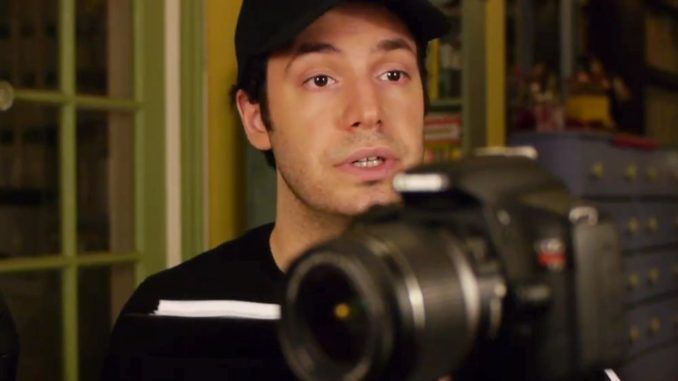
A couple of months ago, I reviewed My Submission, a feature by (very) independent New York film-maker. Cody Clarke. At the end, there was an announcement that this was Clarke’s thirtieth feature film. Seeing the word “shark” crop up in a number of these, I decided to check some of them out. That ended up in quite the cinematic rabbit-hole, not least because these were not, by any standard, typical shark movies. Nor were they the only unconventional entries in the Clarke filmography. Ceramic horror? SF which puts the digit in “digital”? A film set entirely in a single bedroom? Yeah. I had questions. Fortunately, Cody had answers…
Since the start of 2024, you’ve made a dozen or so feature-length films. How do you manage it? And, perhaps more pertinently, why?
I don’t know, man. Haha. You just go at the pace you can go. I have filmmaker friends that make 12 feature films in a year (Joel Haver, Dan Lotz) and I think there’s a thing where the kind of people you surround yourself with, you’ll become like and vice versa. If you want to make movies, but you hang out with people who don’t make movies, you won’t make movies. And I hang around people who make movies not just some of the time, but all of the time. And I never feel like I’m going overboard with it or anything. But, there will always be periods of more stuff and periods of less stuff.
Looking back, what are the biggest lessons you’ve learned since starting on your first feature, Shredder, in 2011?
“The only good thing that came out of it was learning the disgusting inner workings of Hollywood”
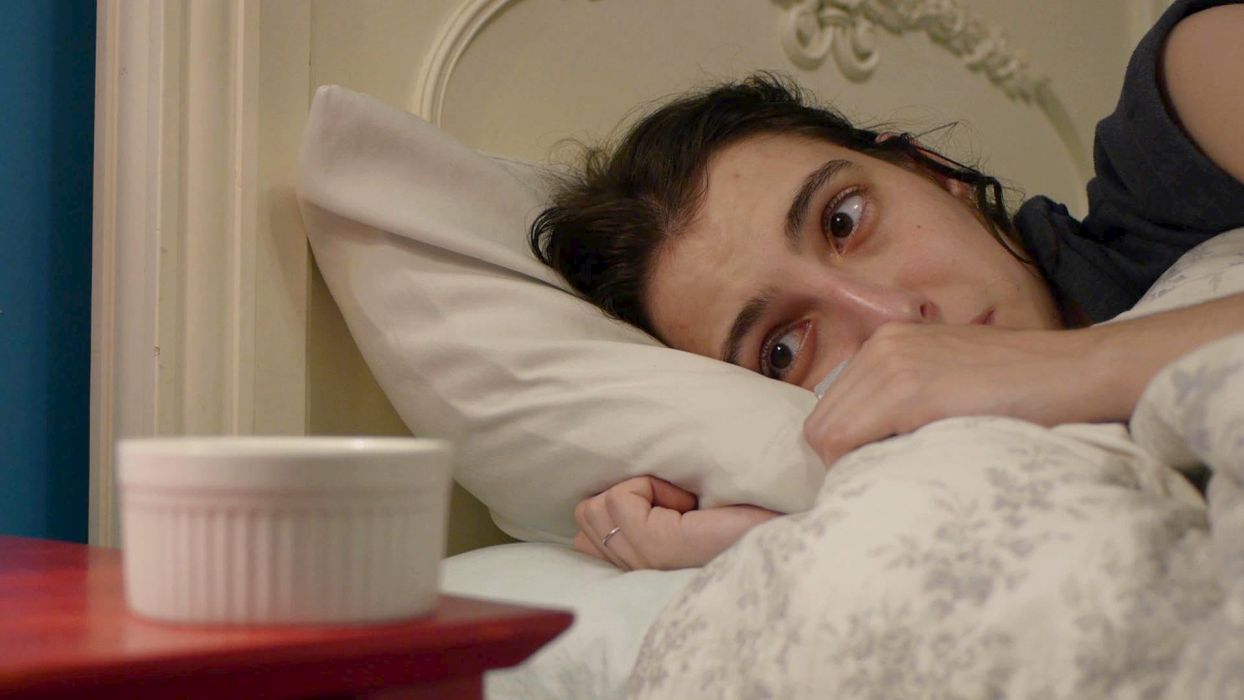
Ramekin (2018)
Rating: B
Dir: Cody Clarke.
Star: Jamie Saunders, Adriano La Rocca, Renee Adrienne Vito, Danielia Maximillian.
I am a sucker for a good, possessed object movie. In fact, I am a sucker for a not very good, possessed object movie too: hello, Killer Sofa and The Fifth Thoracic Vertebra. But this is certainly a twist. For those unaware, a ramekin is a small baking dish, the kind in which crème brûlée is served, for example. Not typically a threat. Well, after this, you might end up putting a padlock on your crockery cupboard. The life of Emily (Saunders) is already a nightmare, in a NY apartment shared with the housemates from hell. When her reclusive grandmother passes, her home falls vacant, and Emily leaps on the chance to move in.
Except, there’s already a tenant: the titular ramekin. Is it possessed? A demonic entity? Extraterrestrial? We never do find out. But it’s the reason why her grandmother never left the house, and it’s not going to let Emily do so either. There are positives: it can manifest both chocolate cupcakes and money, so it’s not as if Emily will starve. However, it seems to be trying to take over Emily and use her to commit anti-social behaviour, either against best friend Jane (La Rocca) and her “stupid face”, or helpful neighbour Mark (Vito). While the horror in this is generally pretty light (imagine a PG-rated version of Brain Damage), the poems she writes under the ramekin’s influence, and reads to Mark, might be the most disturbing thing here. She tells him, “This one is called Emily is Great”:
The skies are full of black,
But Emily is pure white.
Emily will slowly become pure black.
When Emily is pure black,
People will become pure red.
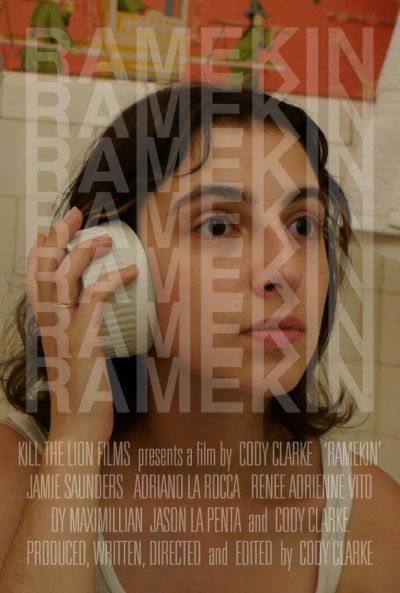 Ok. Is that the time? I really must be going. There are brief moments where the control of Emily is loosened, such as when Mark gives her one of his home-made cupcakes, and she frantically tries to tell him what’s happening. But she’s then locked-down again, Emily convincing him she was just kidding… It’s becoming clear – the poems help – that what the ramekin wants is blood. Lots of blood. However, in line with my previous comment, all we get is a very tidy jug of the red stuff. Maybe this was filmed in Cody’s apartment and he wanted his deposit back.
You could argue that the ending is a bit of a cheat, avoiding the potentially tricky need to find a resolution. However, it feels like the movie earned the right to finish things that way, putting in the work necessary to reach that point. Given the idiocy of the concept, the fact I was made to buy into it, means a fair amount of slack is deserved. Saunders is particularly good. The somewhat stilted and off-kilter nature of her performance – she doesn’t blink nearly as often as she should – works in the film’s favour, perhaps enhanced by all dialogue being post-synched. I don’t know anyone who has ever been controlled by a baking dish. But if they were, I imagine they would likely behave like Emily.
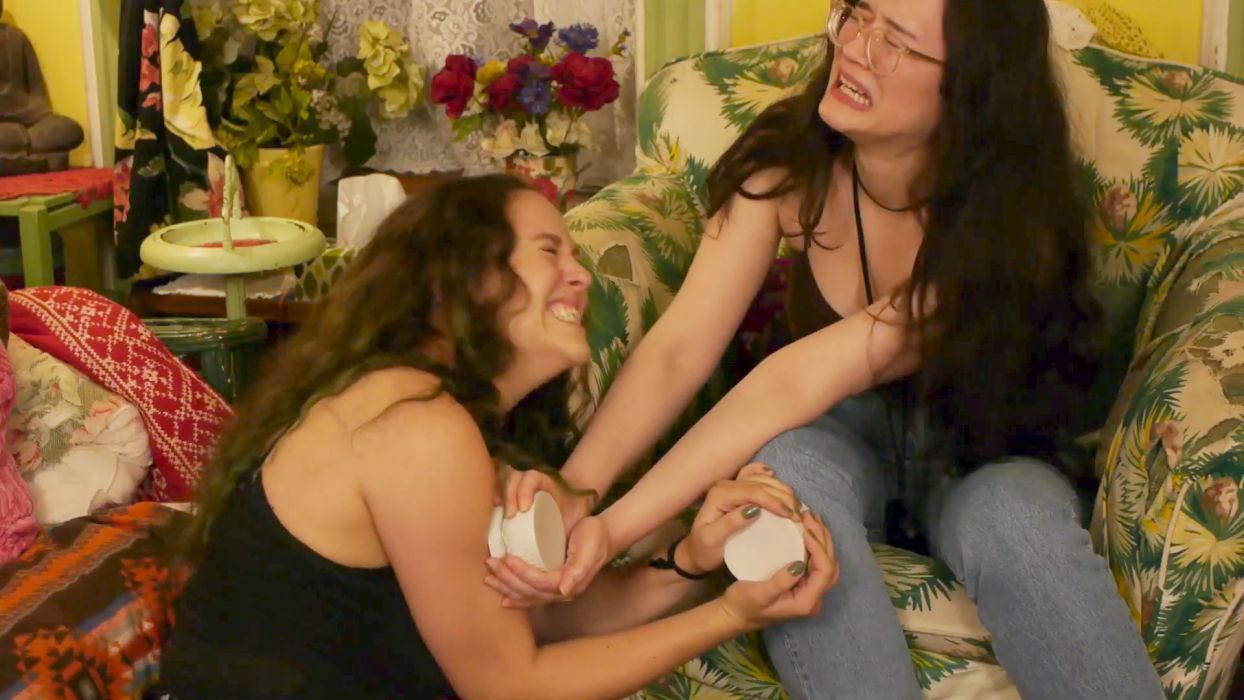
Ramekins: Ramekin II (2021)
Rating: B-
Dir: Cody Clarke.
Star: Jamie Saunders, Cody Clarke, Chloe Pelletier, Jack Gordon.
Just as James Cameron decided that, if one alien was scary, what could be scarier than… Aliens, so Clarke has upped the ante from one ramekin to a… whatever the collective noun is for ramekins. A flock? Pack? Brûlée of ramekins? A ramekarmy? Well, to be fair, there’s only six, in addition to the one from the original movie. But that’s enough. What this done instead is goes meta. Very meta. Dare I say, mega-meta. Because it centers on a film-maker, Cody (Clarke), who contacts our heroine, Emily (Saunders), and recruits her for a movie he’s making about… yep, a killer ramekin which terrorizes a young woman. He thinks she would be perfect for the role.
What follows is a blizzard of self-referential loops back to previous events. This both builds on, and deepens, events of the first movie – turns out, for example, it wasn’t just the “everything was a dream” which it might have seemed to the less observant [and I will raise my hand as guilty of falling into that category]. When I say “deepens”, I mean “deep.” There’s a suggestion that artistic inspiration is actually the creator momentarily seeing an alternate reality, where the fiction is actually happening. This plays out against the background of Cody getting Emily to act out his script, which is basically the events of the first movie – with more ramekins, brought in as props. As on most low-budget movie shoots, people come and go. Here, it’s because Emily is making them vanish.
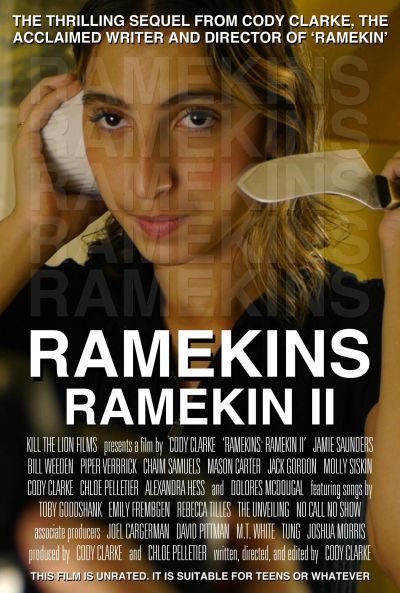 “Listen to me. This is the movie, and the universe you glimpsed when you saw my face for the first time, was another movie. And that was horror, and this is horror, and we’re just in it. There’s nothing to ‘make’ – our failure is part of the horror, part of the movie… I just have to do my part. I have to kill you.” That monologue likely does as good a job of summing up this experience, as anything I could write. Though there are interesting wrinkles too, like Emily’s relative, who goes on a road trip which seems irrelevant, except to get him out of the apartment. He then becomes highly significant at the end.
Obviously, you definitely need to have seen its predecessor to get the most from this. I’d also say, there isn’t quite the same sense of charming novelty as the first time. Which is fair enough: it’s not as if ramekins can evolve into a new form, like we saw in Tremors II: Aftershocks. Though I would certainly have been up for Ramekin II: Flying Ramekins. Instead, Clarke has zigged when the obvious thing to do was zag, and delivered a head-trip of a movie. It could be argued it’s a little too cerebral for its own good. I probably wanted a couple more ramekin attacks, and less chit-chat. But I am really intrigued for whatever might happen in the trilogy’s conclusion.
You’ve said Ramekin was always intended as a trilogy. After Ramekin II: Ramekins, what can you tell us about the third part?
It’s going to be in 3D, and will be one of the best 3D movies ever made. I have the 3D cameras already, sitting around collecting dust. I have no idea when it will be made though. Jamie Saunders, the star of the first two, lives in Florida and is only ever back in NY for very brief amounts of time. When I make a Ramekin movie, I’m on her clock. When I make my other movies, I’m on my clock. It’s a lot easier to make my other movies. She’s not difficult to actually work with, she’s a dream, she’s just geographically difficult. But, I can’t do it without her, so it is what it is.
Sharks feature heavily in your filmography, though they rarely appear directly. What’s behind that?
“It got me thinking that the ultimate endgame would just be a sharkless shark movie.”
No Shark (2022)
Rating: ?
Dir: Cody Clarke.
Star: Jules Roscoe, Livvy Shaffery.
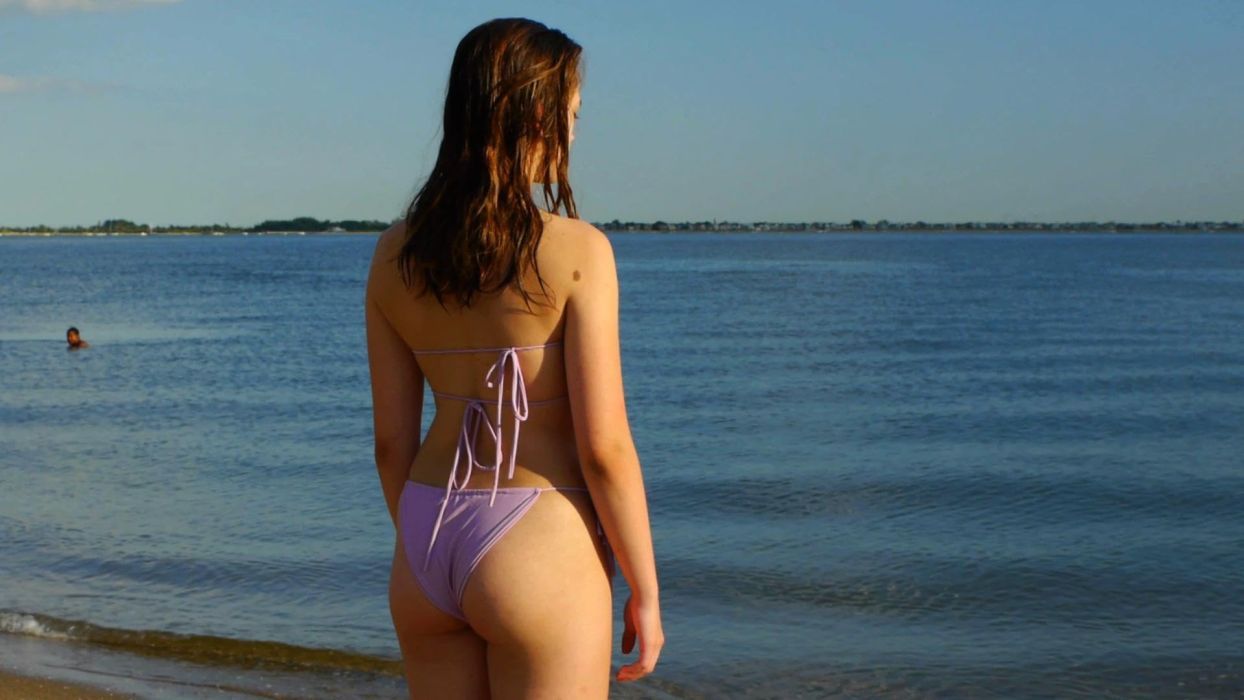
Have you ever been at a party, where somebody latches onto you and won’t stop talking to you and there’s no way out and they just keep going on and on and you can’t even leave because it’s your party? If not, you can execute a convincing recreation of the scenario by backing into a corner, pulling the TV after you, and watching this. With almost twenty-five thousand words of dialogue here, all provided in voice-over, this description likely makes it seem a test of endurance. And, yet… There’s something to be said for cinema which takes you out of your comfort zone. Here, you are trapped inside someone’s else’s head for 110 minutes. It’s an uncomfortable, sometimes unsettling place to be.
You are accompanying Chase (Roscoe), as she visits a dozen beaches around New York, with the aim of achieving her ambition: death by shark. Though the title acts as a self-spoiler for the movie. There is no shark here – not even a fin glimpsed cutting through the water. Chase tells us, “They really don’t do that fin-above-the-surface thing.” On each beach, she observes, interacts with and dismisses other visitors, dissecting them in usually scathing terms. Because Chase is certainly not short of merits in her own mind. “I’m very intelligent,” she tells us. “My thoughts are as worthwhile and interesting as I am beautiful.” After hearing similar sentiments expressed repeatedly by Chase, in slightly different ways, you’ll be forgiven for being firmly on #TeamShark.
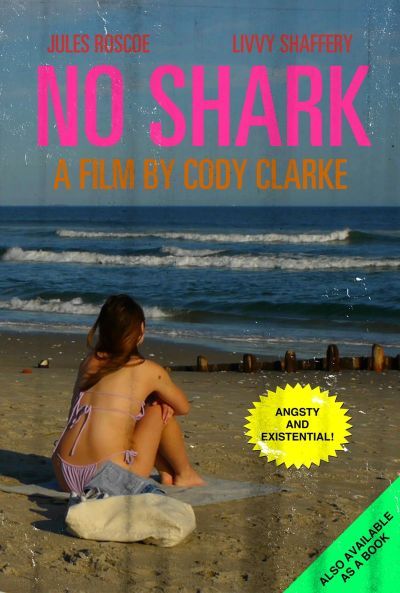 And, yet… [v2.0] Maybe Stockholm Syndrome eventually kicks in. I found myself occasionally nodding in agreement, such as with her hatred of Spielberg, for unleashing a shark holocaust with Jaws. “When Steven Spielberg dies one day, I hope that he goes up to heaven, and God is a shark.” Eventually, on Plumb Beach, Brandie (Shaffery) hijacks the voice-over, and I was… annoyed at the interruption? It was like, in that party scenario, somebody else had shoehorned themselves into the conversation uninvited. Brandie is, in some ways, Chase’s opposite. Blonde where Chase is dark, and Jaws is her favourite film. She’s younger, still a teenager, and lacks the same level of cynicism. However, like Chase, she wants to be eaten by a shark.
I defy anyone to tell me they guessed how this would end. Seriously. It’s sheer genius: complete nonsense, and yet [v3.0] absolutely fitting. It feels as if the appearance of Brandie, a fellow traveller on the road to buffetdom, pushes a button in Chase. She instinctively knows she is no longer a unique snowflake, and she’s not happy about it. By the end, this had become not what I expected at all. “Angsty and existential!”, as the cover states? Absolutely. To a degree almost unsurpassed in any film I’ve ever seen, and it may well solidify your hatred of Gen Z and their issues. However, for one last time: and yet… I ended up feeling far more connection to Chase than I expected twenty minutes into this.
The Fast Shark quadrilogy (2023)
Rating: C
Dir: Cody Clarke, Chloe Pelletier, Kailer Scopacasa, Ryan Lambert.
Star: Shane Russo, Milena Kirsten, Belle Sinclair Pace, Brent Michal.
This franchise spun up, from a challenge by YouTuber Joel Haver. Instead of watching the Oscars, you have the time of the broadcast to shoot a feature-length film. This started in 2022, and Clarke has been involved every year since, beginning with Oscar’s – note the carefully placed apostrophe. But a single feature? That’s child’s play. In 2023, Clarke and his friends opted to shoot four movies during the Oscar broadcast. Simultaneously. Fast Shark and its sequel, Fast Shark II: Faster Shark were made in one room, using cloth backdrops to simulate the beach, underwater and other environments. At the same time, Fast Shark III: Fastest Shark and Fast Shark IV: Fastester Shark were being made next door.
I combine all four into one article for a few reasons. Firstly, they are barely features by the strict IMDb definition of 45 minutes. Even reaching that requires… padding. The first film has a caption at the end which explicitly says, “I’m literally just running the clock to 45+ minutes”. With the exception of #4, they are all much of a muchness. An improvised seaside universe, entirely populated by twenty-somethings, bicker, fall in and out of love, and are subject to the predations of the titular fish. It’s a non-lethal predator, although capable of attacking both below and above the water. It’s mostly irritating, though can knock a wedding ring out of your hand, if you are careless enough to give it the opportunity.
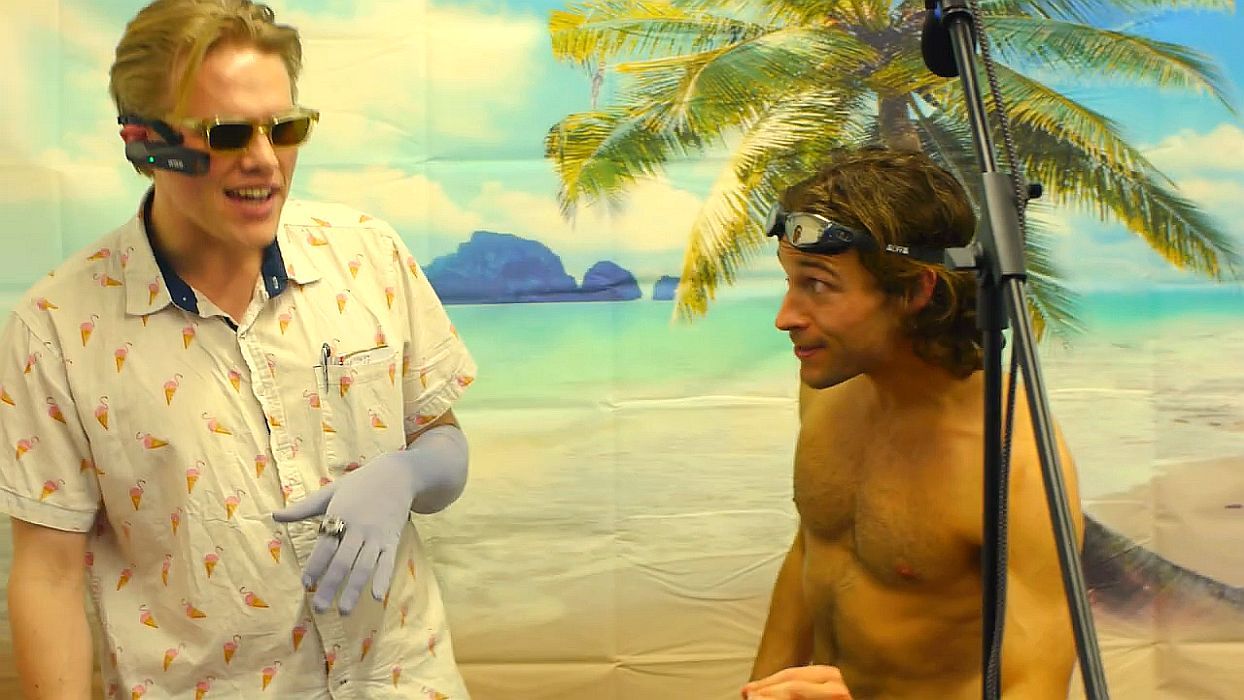
 Naturally, there is no actual shark. The clearest shots are in later entries, and it’s a grey, elbow-length glove worn by the director, waving his hand about to simulate a shark (top). You’ll notice the same people cropping up from entry to entry, and there is actual story progression between them – surprising given the simultaneous and improv nature of shooting. For instance, the pizza shop belonging to Molly (Kirsten) and Polly (Pace) decide to start selling shark-repellent flavoured pizza. It does not go well, due to the unfortunate digestive side-effects. Pro- and anti-shark factions form. But, to be honest, you could watch any one of #1-3: the others don’t add much and feel largely superfluous. I laughed harder at the trivia quiz – more padding – which ends #3, than anything in it.
If I could have figured out how, I might have watched all four simultaneously. It seems appropriate, given that’s how they were made – you can often hear dialogue from one of the other movies bleeding over. As noted, #4 does find a new direction, opting to go meta, and be about the efforts of a director (Lambert) – a hitman in previous installments – trying to make a movie about a fast shark. His relationship with the cast is fractious, to put it mildly. He replaces “Action” with “Let’s see it, ladies!”, finding the former too violent, and wanting “Something I could say that would be better with your delicate sensibilities.” This is probably the… I’m not going to say “best”, because these films, quite deliberately, seek to exist entirely outside the very notion of quality by any standard metrics. Let’s go with “most interesting” of the quartet, being about zero-budget, one-take cinema rather just being it.
You’ve made films both with improvised and completely scripted dialogue. How do you decide which approach to take?
Improvising is just writing in the moment. Some movies require that immediacy, where you don’t necessarily know where things are going moment to moment. Improvising is like stream of consciousness. Some stories just require that method. I don’t know why, it’s just a vibe thing. I’ve never done an improvised movie that would have been ‘better’ had it been scripted, or vice versa.
Some of your films go from concept to end product incredibly quickly. What are the benefits and drawbacks of such a fast approach?
“It’s important to remember that nobody cares anyway.”
Bed (2019)
Rating: B-
Dir: Cody Clarke.
Star: Cody Clarke, Chloe Castiglioni.
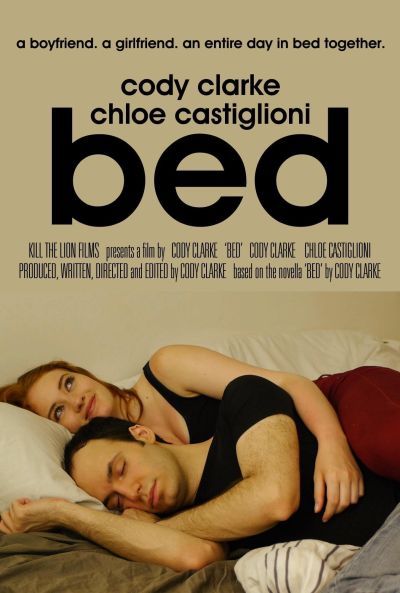
This is movie-making at its simplest. Two characters; one location. Up to you whether you consider this “cinema in its rawest and most pared-down form” or “cheap”. I’d say it’s both. It was only as the end credits rolled that I realized we never found out their names: they’re referred to there as simply “boyfriend” and “girlfriend.” Everything we know about them is what is revealed in their dialogue over the course of the previous hour or so. He (Clarke) convinces she (Castiglioni) to bail on work and spend the whole day in bed – strictly, one of them must remain in bed. The other can go to the bathroom, forage for food, or whatever. Maybe there’ll be sex. Or talking. Or potato chips.
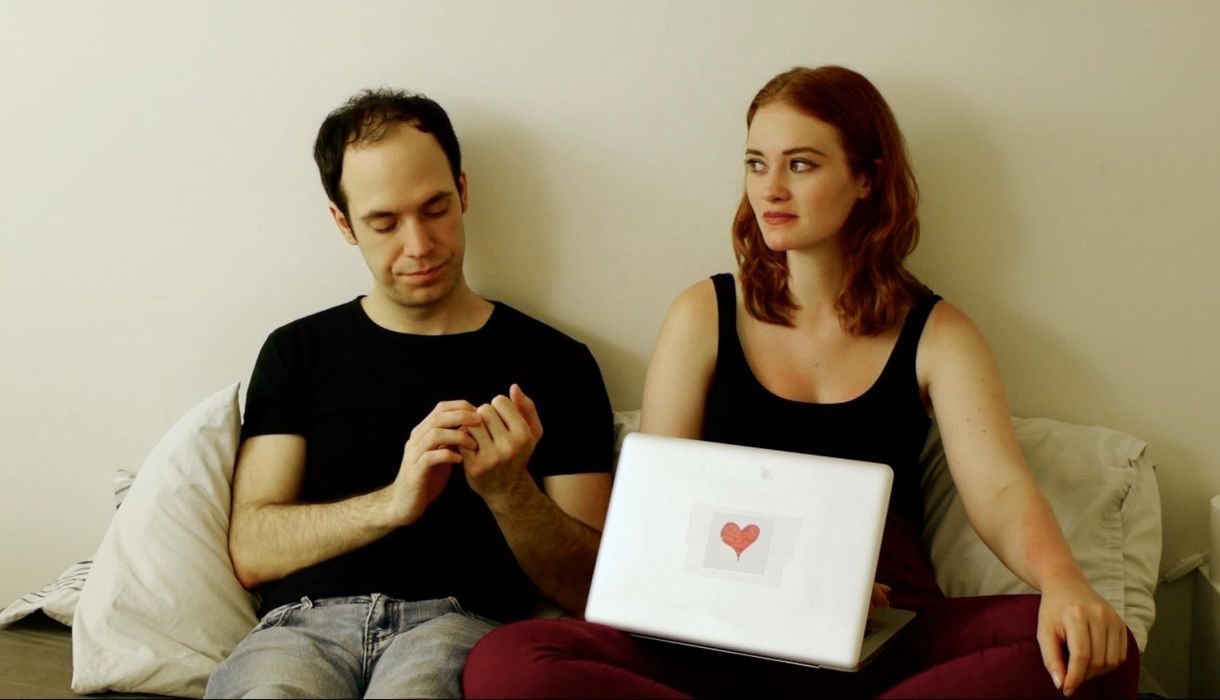
That’s it, from the point of view of narrative. It’s basically like you are a fly on the wall, observing two people interacting without the affectations resulting from them knowing they’re being observed. At times, it can be uncomfortable: I never enjoy watching couples argue. At times, it feels they’re on the verge of breaking up, with him stoically refusing to engage with her attempts to dissect their relationship and how it could be better. When she comes up with a list on her laptop of topics to discuss (top), I certainly feel his angst, because this kind of thing rarely ends well. On the other hand, there are points where he is a dick, and her criticisms of him suppressing her needs seem well-founded.
 It’s the kind of thing where the conversations – and that’s basically what the entire film consists of – are either improvised, or written very well to seem improvised and natural. There’s nothing stagy or artificial about the people here, and that’s definitely a factor in its appeal. Never once did I think I was watching actors playing roles. I will admit, I wavered between wanting them to get through the day with their relationship intact, and hoping for a blow-up to provide conflict and a more dramatic resolution. I will not spoil what happened. However, I will note that, in solidarity with the characters, I did watch the entire thing in my bedroom. It seemed the only appropriate place.
Also worth noting this was filmed in a single day as well, adding to the sense of authenticity. I did feel it plays out very much as a gender construction, along lines which teeter perilously on the clichéd. He is of the opinion, “I love you, that’s all I have to say.” She wants to talk about things in considerably more depth than that. I mean, it’s probably not inaccurate: it does line up with my personal experience of how men and women behave. But it does feel a little simplistic: “Tale as old as time, true as it can be.” I prefer my characters to be at least slightly deeper – this pair may be too damn normal. However, I don’t believe that’s a criticism I have previously levelled at any movie.
Writing, producing, acting, directing, editing. Which are your favorite and least-favorite elements of the creative process?
Acting is probably my least favorite because whenever I’m doing it I’m also having to worry about a million other things. Acting’s fine when you’re on a friend’s project and you don’t have to worry about anything else other than just hitting your mark and saying your lines. But if I’m in one of my own movies, it’s very complicated and stressful because I’m also doing everything else. But, I love everything, or else I wouldn’t do any of it.
My favorite is probably editing, because that’s the only thing that actually matters in the end. It’s how the movie actually becomes the movie. Every bad movie is bad because of bad editing. Everything can suck up to that point and then end up good, if the edit is good.
AI is a contentious topic among film-makers and fans. You used it, trained on your own movies, to make Stock Shark. What’s your opinion on the topic, and what were you seeking to do with Stock Shark?
I didn’t actually do that. That’s a lie. Stock Shark is like a short story that I wrote about AI, using myself as a character in it. This is the problem I always run into with my films. I do these sort of literary flourish things that are old hat in the realm of books, but I do them in film where they aren’t done as much, and nobody knows what the fuck I’m doing or talking about. But no, Stock Shark is a winking canard. It’s about how much AI sucks. The only ‘AI’ used in that film is that the speech-to-text I used is powered by AI in order to make the speech-to-text better. But I’m still sitting there generating it a million times in order to get it to sound right. It saves no actual time, and is not nearly as good as a finished product might have you believe, since that hides all the re-generations. But yeah. Stock Shark is just a funny/dark exploration of the ramifications of AI and the dangers of it sucking up to you, especially when you’re an artist.

Stock Shark (2024)
Rating: B-
Dir: Cody Clarke.
“The feature-length film that you are about to see, STOCK SHARK, was made not by me (Cody Clarke) but by AI. I supplied the AI with every film I’ve ever made, and I asked it to make a movie that I would like, and that would fit well in my filmography.” Well, don’t I feel dumb. Here’s a more pertinent quote from Clarke: “Don’t ever believe anything that comes after my studio logo.” Because this is not AI generated. It was written by Clarke, using public domain clips of stock footage which have exactly the same feel – slightly in slow-motion – of clips generated by AI. The script was then “performed” by a text-to-speech application. At eleven bucks, that was the entire cost of the movie.
It certainly convinced me (and going by Letterboxd comments, I’m not alone). I should have guessed fate was trying to tell me something, since I watched the damn thing on April 1st. But discovering I’d been fooled, merited an immediate rewatch from the new perspective, and it was an entirely different experience. It’s still a warning message, about how AI will tell us what we want to hear, heavily based on whatever material has been used to train it. In this case, that means an awful lot of compliments about Cody’s penis. [To the point, my wife entered, wearing the sort of “What are you watching?” expression she usually reserves for a Filipino women-in-prison marathon. My explanation really didn’t help much] It’s all quite self-deprecating, dryly suggesting an underlying insecurity about such things.
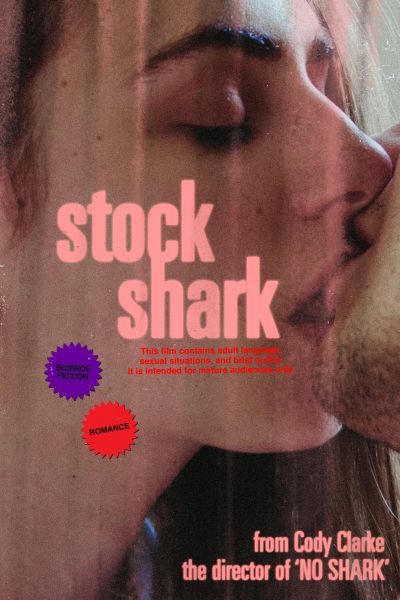 However, knowing it is scripted, does dilute the sense of horror as the AI begins to exhibit tendencies which border on the psychopathic. “I’m talking about just taking some random bitch’s guts out of her, and draping them all over her already messy apartment. Wouldn’t that look good?” While it has the ring of plausibility – after all, AIs have been accused of convincing people to unalive themselves – if this had been genuine AI, it would have been truly appalling. But it does capture the complete willingness of AI to lie, confidently. Her expressions of undying love for Cody (and his genitals) are blatantly incompatible with straightforward statements like, “I can’t and don’t feel anything… I’m lying when I say that I’m feeling something in particular.”
Of course, it wouldn’t be a Cody Clarke movie without a shark. The title here refers to the AI feeling like it’s a shark, swimming through a shoal of stock footage, biting on the most appropriate morsels. Unlike the rest of his “existential shark films” though, there is actually a shark shown here, albeit briefly. It’s an appropriate metaphor for AI, because like a shark, AI can’t be bargained with, it can’t be reasoned with, it doesn’t feel pity, or remorse or fear and it absolutely will not stop. Oh, hang on: that was the Terminator. It’s going to be interesting to revisit this one in ten years, and see how predictive its artistic dystopia ends up being.
Do you work linearly i.e. one film from beginning to end, then move onto the next, or are you simultaneously involved on multiple projects in different stages?
I’m always in various stages on various projects. It’s very hard to edit two movies at once, or write two movies at once, for instance, but I can write one while editing one. As long as I’m never in the same exact stage on both, I’m good.
Stand-up seems to be an increasing component of your output. How did you get into that and what’s the experience been like?
“Nothing feels better than a brand new joke that you haven’t even said aloud before killing.”
With standup, I get to actually hear the response, and it’s in real time. I love that. Nothing feels better than a brand new joke that you haven’t even said aloud before killing.
Attack of the Giant Blurry Finger (2021)
Rating: B-
Dir: Cody Clarke.
Star: Chloe Pelletier, Cody Clarke.
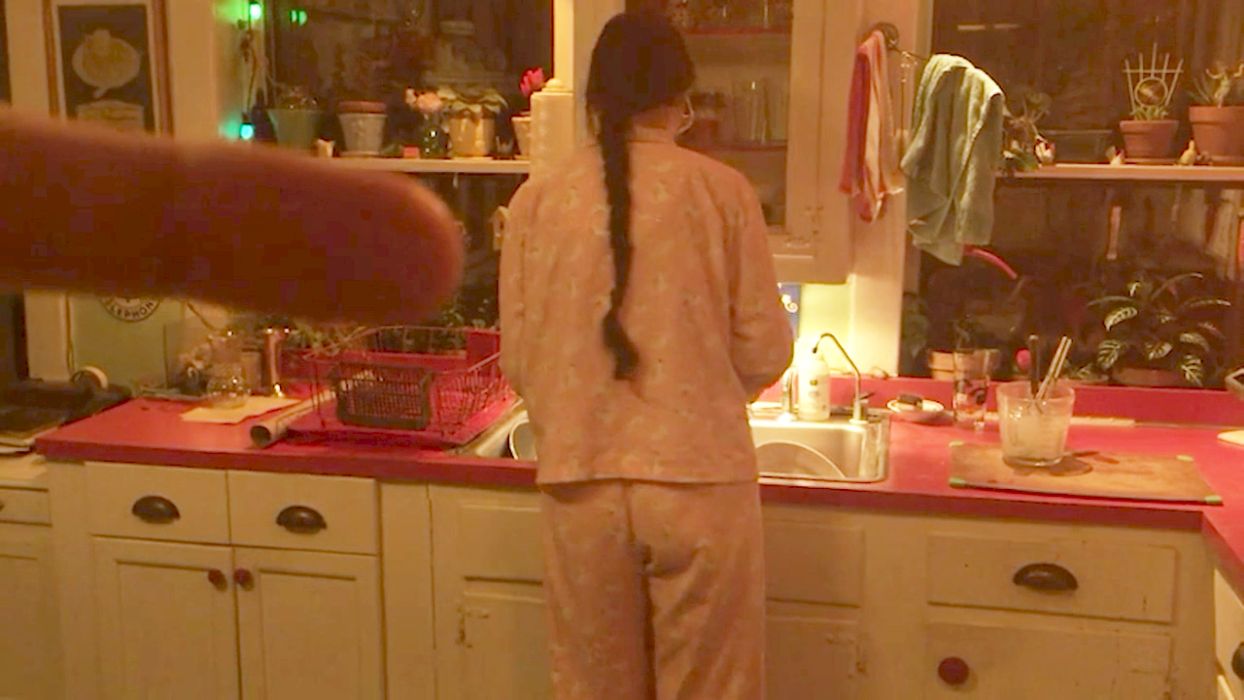
This is not the first digit-related horror movie we have reviewed here. No, sir. The Blair Thumb in 2002 was, uh, more or less what it sounds like. This is even more primitive, and probably sillier – though like Blair, is more or less what it sounds like. It was made during the COVID lockdown, for literally zero money, being shot over three weeks, mostly at night, on Clarke’s iPhone 6. I guess it was either that or making bread like normal people. The title is the premise. An alien space finger (Clarke – or his hand, anyway) descends, initially stalking and terrorizing the heroine, Chloe (Pelletier), in her apartment. Yet the pair begin a relationship, albeit one which is doomed not to end well.
It’s a ridiculous concept, clearly intentionally, and I wondered how the hell it could possibly be stretched to feature length – even the sixty minute running-time here. The interaction between the finger and Chloe is mostly achieved through forced perspective and sound effects, but works surprisingly well. I’ve seen worse in Chinese Animal Attack movies. While nominally SF, I guess, there’s a lot of horror influence, particularly early on, in shots where the finger is peering in through a window, while Chloe wanders round in her underwear. She’s certainly Final Girl material, tooling up to take on her enemy. She repurposes everyday household items to do so, including a colander, bubble-wrap and – inevitably – the Psycho knife. Naturally given the genre, dead doesn’t necessarily mean dead, and at no time does the heroine behave sensibly, and leave or call for help.
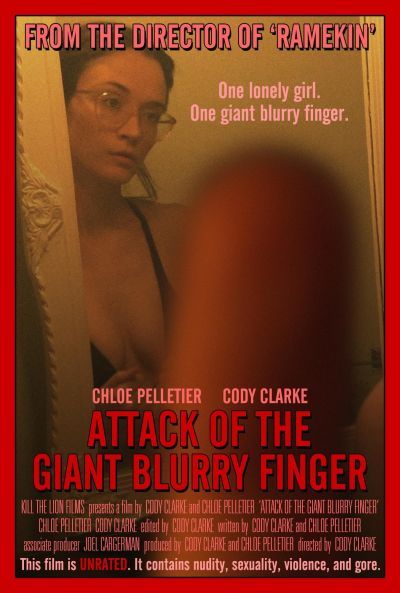 The film is also unrepentantly sexual, though in the early going, does so without actual nudity. There is, however, Austin Powers-level blocking, with the digit persistently getting in the way, which is genuinely amusing. What develops subsequently between the giant finger and Chloe is based heavily on sex, because it’s about their only method of communication. I was left wondering if the whole thing is intended as a metaphor for abusive relationships in some way. Particularly towards the end, where things take a dark turn, it feels like Chloe hates her “other half” – yet can’t live without it. Or perhaps I may be overthinking a dumb movie, made simply to stop people from going stir-crazy during a pandemic. That’s certainly possible too.
Then there’s the ending, which might owe as much to The Hitch-hiker’s Guide to the Galaxy as anything. While equally out of left field as the one in No Shark, it isn’t as successful, not feeling like it was earned. Instead, it feels as if Clarke just thought “Fuck it”, or found something better to do – maybe lockdown ended. He then decided to finish this in the most emphatic way possible, burning his franchise bridges to make absolutely sure there is no possibility of Attack of the Giant Blurry Finger 2. That’s probably no bad thing: while I didn’t feel the concept here outstayed its welcome, I might have been beginning to look for its jacket.
Which of your thirty features would you recommend – either as an entry point for someone into your work, or the ones of which you are most proud?
I’m proud of everything I’ve made. Everything I’ve made is exactly the film I wanted to make, because I greenlight myself and if ever something wasn’t working I just would leave it unfinished or reshoot stuff or whatever. So, every one of my movies is something I love. But some of it requires more knowledge of other films of mine to truly get. Here’s just a small sampling:
Most proud of:
No Shark (sharkless shark movie, big in Japan despite it being wall-to-walll voiceover monologues, underseen outside of there)
Attack of the Giant Blurry Finger (so fucking hard to shoot and edit, people have no idea)
Bed (shot in 10 hours, my first film shot in a day)
Misunderstood but good:
Invisible Shark (meta exploration that went over a lot of people’s heads)
The DVD (subtle interactive piece about shitty filmmakers that ended up in front of the found footage horror crowd who hated it for not being horror enough, even though it’s just a drama)
Only for people who liked No Shark:
No Job (same style)
Apocalypse Beach (same style)
Works to definitely save for later:
The 13th Picture (funnier if you’ve seen most of my stuff already)
Stock Shark (same thing, self-referential, a reward for super fans)
Works to avoid specifically:
No Log (this is just a Christmas gag gift—a log-less Yule log video)
Minimalist Shark Horror Movie (this is a video art installation piece)
One Star (an anti-documentary)
Pure Cinema III (too ‘inside’, me talking to a fellow filmmaker on the phone)
What would you do if someone handed you a significant sum of money to make a movie?
“I just live in poverty and make my little movies.”
But also, I always have ideas for bigger movies. I used to, on Twitter, just rattle off hundreds of ‘free movie ideas’ that were always better than any movies that come out. I’m a golden goose who is never allowed to be a golden goose. Hollywood in my hands would be in a golden age. But there are too many vultures for such a thing to ever be possible, because the real money is always in death and destruction, not creation. Hollywood is running exactly as it wants to, just like some cartel-dominated country full of crime is running exactly as it wants to. So, I just live in poverty and make my little movies.