
Rating: C+
Dir: Deborah Correa
Star: Damian Conrad-Davis, Sam Bullington, Wayne Charles Baker, Essa O’Shea
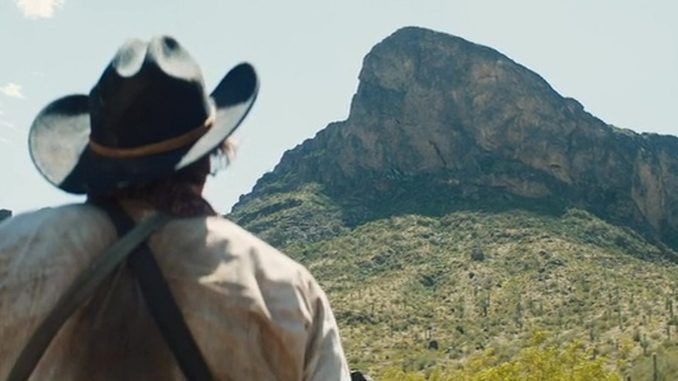
We’re familiar with the location in which this takes place. Picacho Peak is just off to the right of I-10, as we head down to Tucson. By our marriage vows, I am required to refer to it as “Pikachu Peak,” every time we pass it, and Chris is obliged to roll her eyes and snort derisively. In 1862, it was the site of the second-most Western conflict of the Civil War, though the “Battle of Picacho Pass” hardly deserves the name, since it was more of a ninety-minute skirmish. There was barely a dozen men on either side, with the Confederate group prevailing and able subsequently to warn Tucson of the approaching Union army. It’s in the wake of this event that the film begins.
Union Corporal Israel Terry (Conrad-Davis) was wounded in the fight, and is attempting to make his way back to rejoin his comrades. He encounters another soldier, Private Moses Jennings (Bullington), who initially appears also be on the same side, but eventually admits to being a Confederate survivor, also separated from his group. Despite this, the pair agree to a temporary truce, knowing they are deep in Indian territory, and a lone traveller would be picked off very easily. This doesn’t mean they exactly agree with each other. The relationship becomes more complex still, when the duo becomes a trio, with the addition of Great Seer (Baker), an Indian cast out from his tribe after killing the chief’s brother.
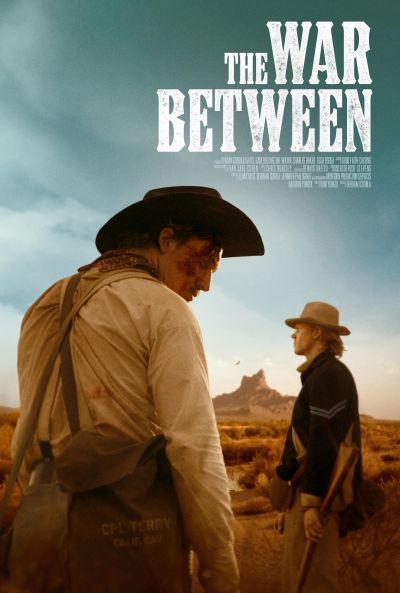 It’s the interplay between the three which is of most interest. Terry and Jennings butt heads over the notion of slavery, but interestingly, it’s the latter who is much more inclined to treat Great Seer as an equal person. Despite their sharp philosophical differences, by the end the two white men have developed a relationship, which Terry describes as “Enemies and friends… Both, together and neither.” Which makes no sense, and yet is a perfect way of summing things up. However, it’s not really sufficient to sustain an hour and a half of tramping through some extreme desert landscapes. Though I give Correa and the crew credit for largely shooting in and around the location where these events would have taken place.
Less successful is the apparent decision to go with a hundred percent natural lighting. This reaches its nadir during a gunfight in the middle of the night where it’s impossible to tell what is going on. There was a full moon the night before the Battle of Picacho Pass, so having some illumination could still have been historically accurate, and would probably have helped avoid viewer annoyance. The ending, weirdly, appears to borrow as much from Night of the Living Dead as any Western: a bit of an odd choice. But it does tie things up, linking to earlier flashbacks of Terry’s pre-war life with his wife (O’Shea) and son. It does so in a way which likely pushed the final grade here up a couple of notches.