
Rating: C
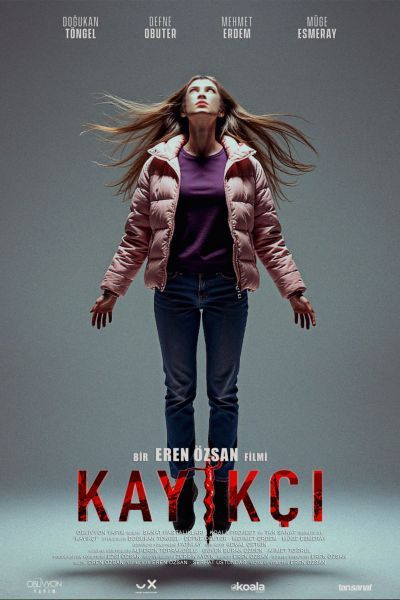
Dir: Eren Ozsan
Star:Dogukan Tongel, Defne Obuter, Mehmet Erdem, Muge Esmeray
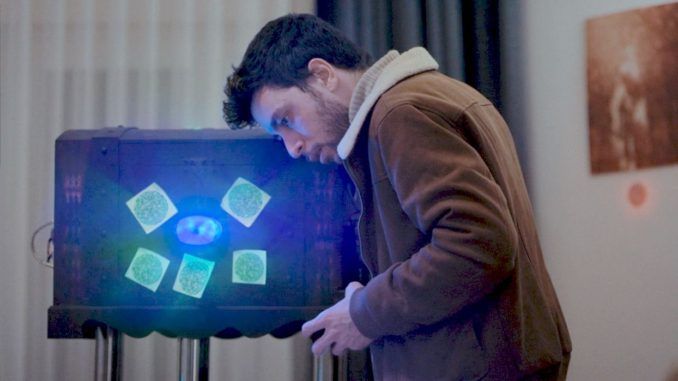
You’d be forgiven for thinking this was another entry in the Turkish horror franchises, like Siccin or Dabbe, which we’ve covered before. I mean, the synopsis is “In 2085, a grieving mother hires a young ritualist to bring her son back to life inside an isolated villa where reality fractures, and a forbidden resurrection unleashes a terrifying night.” However, the makers seem keen to distance themselves somewhat from the horror aspects, calling it “more drama/sci-fi with some thriller parts.” Which I kinda get. For rather than a religious ritual, it’s more of a scientific one carried out by Kayikci (Tongel), intended to capture the deceased’s spirit, and re-unite it with the corpse.
He has been called in by Elif Talas (Esmeray) to resurrect her son, Alkan (Erdem), who died of a heart attack. Or perhaps not. Meanwhile, the Ferryman – for that’s what Kayikci means in Turkish – is actually sailing on uncharted waters himself, this being his first commission without his father being there to help him. There’s also an unexpected visitor, in the shape of Asli Güner (Obuter), who is looking for Alkan. She basically acts as the audience’s surrogate, asking Kayikci the questions we are probably asking ourself, like “Have you ever run into someone you’ve brought back to life?” and “Would you like to be resurrected?”. This is very much needed, because it feels like it’s only after she shows up, around the hour mark, that things properly get going.
 The pacing to that point is deliberate to the point of dully glacial. It’s largely Kayikci wandering round the house, setting up his equipment and finding things that may or may not become significant later. You don’t really know at the time, and I was left wondering when things were going to get going. There’s setting the scene and building atmosphere… then we have this [gestures at the first 60 minutes]. It also has a vaguely post-apocalyptic feel, opening by saying, “In the year 2057, after the extinction of bees, a new era began. The world regressed in many areas, including agriculture, livestock, textiles, and especially technology.” But this bee-pocalypse never really serves any purpose either, beyond a notable haze which gives all external shots a smoky feel.
Despite being painfully uninteresting for its first half, there are positives. The budget was only $6,500, and it consistently looks pretty damn good for the price. The small cast (four people) and mainly single location are never particularly noticeable, and the performances are good enough to do the job [as an aside, credit Ozsan for his technical commentary video about the film, which I found offered some nice insights into production, such as the business of on-set blankets!]. This is intended as the first in a five-movie series, and the flaws aside, there is enough to leave me interested in seeing subsequent entries. We now know who Kayikci is, what he does, and how he operates. Hopefully we’ll get to the meat of things a great deal quicker next time.