
Rating: C-
Dir: Zeshaan Younus
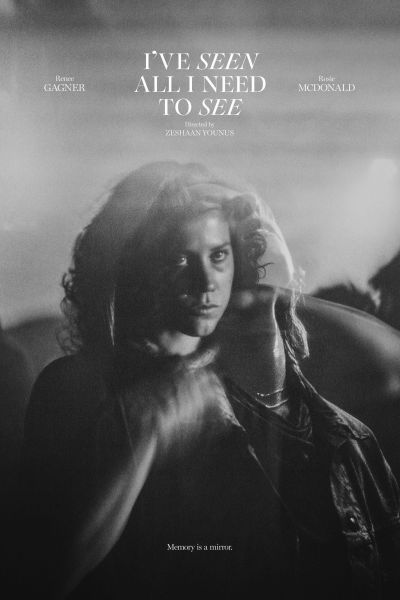
Star: Renee Gagner, Rosie McDonald, John R. Smith Jnr, Sydney McCarthy
There are a couple of moments here that sum up the kind of film this is. At one point, the main character, Parker (Gagner) delivers an emotional monologue about a lost love. Turns out she’s an aspiring actress, and this speech is one she was doing for an audition. But it very much exemplifies the approach here. There’s a lot of voice over, and lines which are – one presumes, intentionally – strikingly artificial. The other is the shooting at the narrative’s core. It happens off-screen. We only hear it. Which begs the question: if the film doesn’t care enough to show it, why should the audience?
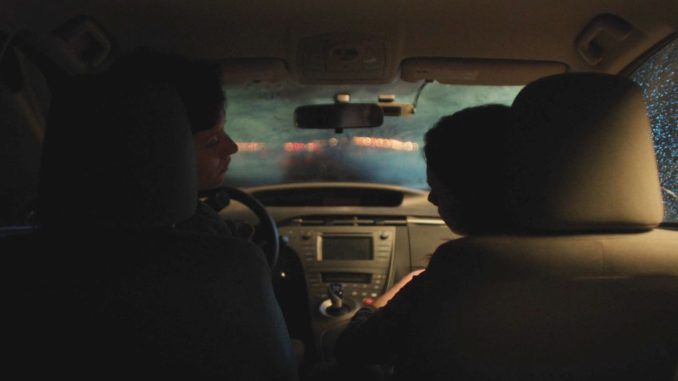
The answer is: the movie really doesn’t care either. In a more traditional entry, the violent death of Parker’s sister, Indiana (McDonald), would have pulled Parker back to their hometown of Tucson, to investigate what happened. And probably punish the guilty. Here? Nothing at all like that. The film instead describes itself as, “an atmospheric and experimental meditation on being lost in the maze of grief.” Prospective viewers need to be fine with that – in a way which makes it clear Younus is a big fan of David Lynch, Terence Malick, and the like. My tolerance for them is… limited, though I have to respect the almost wilful disregard for convention. Want a whole conversation, seeing only the back of the participants’ heads, because it’s filmed from a car’s back-seat? Here you go (top).
 There are a couple of other elements I did enjoy, such as the unexpected and dissonant use of heavy metal on the soundtrack. It’s quite the culture clash, paired with the languid approach to pacing here. Expect lengthy shots of desert landscapes, spider webs, and as noted, the back of people’s heads. I also was quite impressed with the performances. Though you could argue these are Acting with a capital A, often feeling more theatrical than cinematic, they did a decent enough job of holding my attention. But in the final analysis, it’s not enough. There are films which are about the journey, rather than the destination. However, in this case, the motivation seems to be neither.
The hero’s journey here seems purely physical, from California to southern Arizona, and there’s precious little sense Parker has been changed by her adventure. Indeed, to twist a popular saying: her trip could have been an email. All Parker gets out of it, is a not-so veiled threat from Tucson (Smith), one of the people involved in Indiana’s death. That’s still perhaps more than I took from the experience. The title lends itself to easy critical snark, and perhaps not inaccurately. It isn’t for everyone, certainly. It is a case where I concluded less, “This is a bad film”, and much more, “I am clearly not the intended audience.” There is a vision here. It’s just not one I need to share.
[The film is out on digital through Bulldog Film from June 2]