
Rating: D+
Dir: Penny Cullers and Hal Dace
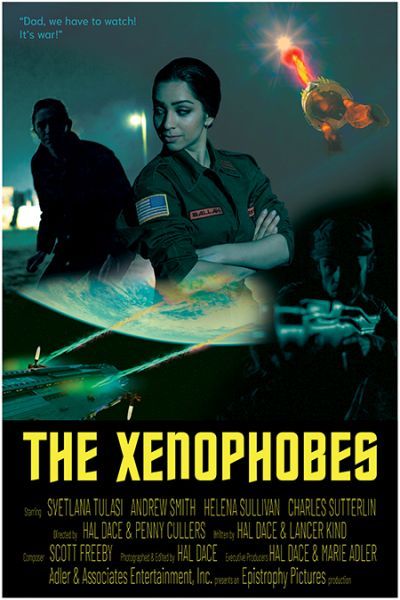
Star: Svetlana Tulasi, Andrew Smith, Helena Sullivan, Charles Sutterlin
Unfortunately, I have to say I liked the theory of this considerably better than the practice. It has some interesting ideas, but other aspects are so shaky as to be a major distraction. There are really two halves to the narrative: I suspect it would have been better to concentrate on one or other. Instead, what you get comes off as frustratingly under-written, and the combination of the disparate chunks, at over two hours, becomes a slog. We begin on a “first contact” expedition to the planet Gliese 849d, where proof of intelligent life has been detected. It’s under the command of Captain Shriya Ballah (Tulasi), and since there’s no faster-than-light travel here, it’s a long-term mission.
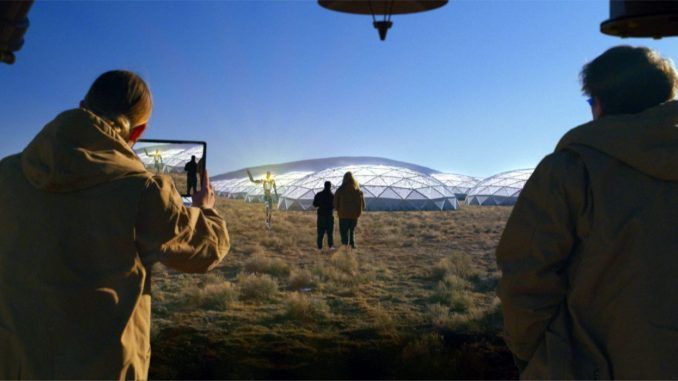
As a result, she’s joined on the craft by her husband, Thelonius (Smith), and young daughter Morag. However, on arrival at their destination after a six-year journey, they discover that the inhabitants of Gliese (above) are not interested in being contacted, or establishing diplomatic relations. It’s a thought-provoking concept – why do we assume aliens would want to know us? This could have developed in intriguing ways, but the film just has Captain Ballah basically turn round and head back. After another six years, they reach Earth, but due to time dilation, sixty years has passed here. A lot has changed, with a one-world government, and the population dosed with a drug to prevent violent thoughts (reminding me somewhat of the world of Equilibrium). Hey, at least it’s not ruled by monkeys.
 Again, this opens the door to a lot of possible scenarios. Instead we get a rather uninteresting one. Morag (Sullivan) hooks up with a newly recruited soldier, Martin Stewart (Sutterlin), and joins his plan to take out a drug production facility, hoping to liberate the masses from their chemical repression. If your worldwide dictatorship can be seriously threatened by one guy with a gun… Yeah, I’m not exactly impressed. It was also notable how life 60 years into the future looks exactly like today, in everything from fashions to cars. There is a line about the new world order stifling innovation, but it’s still difficult to swallow. Look sixty years back, and how radically different society was then.
The other problem is technical elements, which would often give Dr. Who a run for its money. And I mean classic Who, not even NuWho. Going by the lead’s IG page, filming actually finished back in 2020. But there were times when I wondered if it was trying to pay tribute to something like Red Dwarf, or even Blake’s 7 in its effects. A soundtrack not much above MIDI level also gives the impression of a budget consisting of spare change, devaluing the intelligence shown in some aspects. For outside of Interstellar, time dilation doesn’t appear in cinematic SF nearly as much as it should. I’m always a fan of good, hard SF, which remains grounded in reality. However, it doesn’t exempt the makers from criticism elsewhere, and sadly, there’s a lot here to criticize.
[The film is out on Prime Video now]