
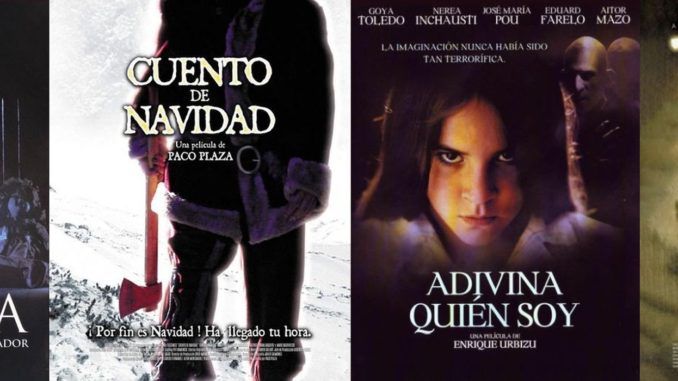
“Children are scared of everything, a noise, the darkness, a shadow, even of silence. Horror gives us the opportunity to become children again.” — Chicho Ibáñez Serrador
This franchise of made for Spanish television movies, has its origins back in the sixties with a TV series called Historias para no dormir (Tales to Keep You Awake). This was created by Chicho Ibáñez Serrador, and when it premiered in 1966, represented one of the first forays into horror on Spanish television. Serrador had already made the show Obras maestras del terror (Masterpieces of Terror) in Argentina, and wanted to do something similar in Spain, both adapting classic stories and commissioning new scripts. His stated goal was “trying to cleanse the horror genre of its cliches and tropes.”
The show began broadcasting February 2nd on Televisión Española, with a version of Fredric Brown’s story, The Birthday. Other entries in the first, fifteen episode season included stories by Edgar Allen Poe and Ray Bradbury, as well as Spanish authors like Carlos Buiza. It also included a dubbed version of a famous Outer Limits episode, Demon With a Glass Hand. In addition to his work behind the camera, Serrador appeared on screen, introducing each episode in the same style as Alfred Hitchcock Presents. Despite strict censorship at the time under General Franco, Serrador was able to proceed. “Classic horror does not have as many problems as other areas… While they focused on making sure women did not have plunging necklines or show their legs, it was possible to sneak in other things.”
In one of the stories you had to see a hand coming out of a grave, but there was no time or money to make the set. So we took five of the crew to a small-town cemetery to shoot that scene. We hid there until it closed, then wrapped one crew member in plastic, put a tube in his mouth so he could breathe and buried him in an empty tomb. When I knew we had got the shots, we all ran out and went to dinner. In the middle of dinner, we realized we had left the guy buried.
— Chicho Ibáñez Serrador
 A second season was commissioned of eight episodes. But the show was canceled after these had aired in 1968; Serrador blames a combination of budgetary reasons, and the station wanting to go in another, more prestigious direction with its original programming. He attempted to revive the format at various points over the next four decades, but only a four-episode season in 1982 achieved any foothold beyond a one-off special. While that version of the show was now in colour, it was shot on video rather than film, a change which the creator felt lessened the impact.
Serrador’s final stab came in 2005, when six films titled Películas para no dormir (Films to Keep You Awake) were produced for Telecinco. Each of these was directed by a different film-maker, all using original scripts, in a manner similar to the Masters of Horror show in the United States. However, it felt like the station were not fully committed to the project. Only a couple of the movies were broadcast by the channel, in 2007, with the other four getting dumped onto a minor channel, Factoría de Ficción, more than two and a half years later. It’s these six films on which we are concentrating here. The original series is okay, but really quite chatty. To give you some idea, it turns Poe’s four-page story, The Cask of Amontillado, into a 52-minute episode. That’s stretching your material.
It is somewhat appropriate that the monster Serrador created has ended up outliving its maker. For after he passed away in 2019, funding for a four-story arc, remaking stories from the classic version of the show. This was renewed for a second season the following year, and included episodes directed by Nacho Vigalondo (Los Cronocrímenes), Jaume Balagueró (REC), Paco Plaze (Veronica) and Alice Waddington (Paradise Hills). All told, it is a franchise which remains one of the best-known and most respected in Hispanic countries, perhaps occupying a similar place in popular culture there, as Rod Serling’s The Twilight Zone does in English-speaking countries. So, let’s delve into the features which form a part of that world…
The Baby’s Room (2006)
Rating: B-
Dir: Álex de la Iglesia
Star: Javier Gutiérrez, Leonor Watling, Sancho Gracia, María Asquerino
Initially, this starts off looking like it’s going to be your bog standard, haunted house movie. Juan (Gutiérrez) and Sonia (Watling) are a married couple with a young child, who have just moved into their new house. It’s a bit of a fixer-upper, but it has lots of character. To help keep an eye on the baby, they use a monitor – except, they start hearing a disturbing voice coming over the air, in addition to the expected baby noises. When the parents enter the room, nobody is there. Thinking it might be interference of some kind, Juan upgrades to an infra-red camera, only to see a shadowy figure sitting beside the child’s crib.
He grabs a knife, and goes to investigate, but almost stabs Sonia, mistaking her for the intruder. That triggers her into taking their son and moving out. Juan digs into the history of the house, with the help of some elderly neighbours, and also a colleague on the paper where he works. He discovers that the presence in the house can only be experienced through electronic equipment, which seems to open a passage to the other side. However, by doing so, it appears this is a route which operates in both directions. While Juan seeks to close this portal by smashing all the equipment he used in his investigation, and Sonia also returns with their child, it appears he may have been too late.
 I don’t want to say more. Because, if it might seem like that generic spooky residence movie mentioned earlier… It isn’t. Not exactly. It’s only in the last third, however, that these angles start to become significant, forcing you to sit up and take notice. Much of what has gone before, is both template horror, and cunning misdirection. Things which seem important, might not be. Other elements feel almost deliberate red herrings of distraction, such as Juan flirting with the assistant who sells him the monitors. He and Sonia seem to have a very happy marriage – so what is that all about? The couple are very likeable, sometimes not the case in this genre, and this makes it easy to sympathize with them and their bizarre situation.
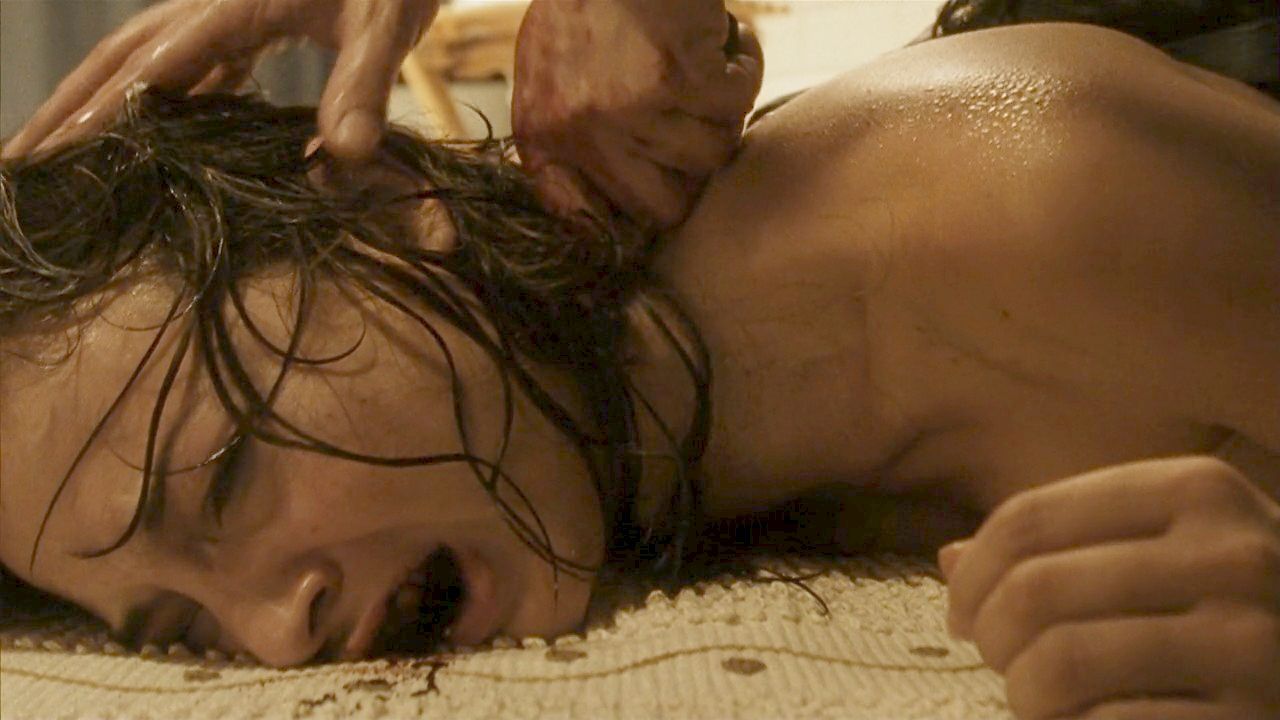
I do wish the truth about what’s happening had become clear earlier. It has considerably more potential, and would have merited further exploration. Instead, we get a gallop to a finish which – if satisfying enough, make no mistake – could be the opening act to a whole, new movie. There isn’t much in the way of effects here and, save one scene (top), it’s more restrained in the use of violence than you’d expect from the director of Perdita Durango. I might ascribe this to it being a TVM, except such reserve is not shown by all the entries. It is a film with which you need to show a bit of patience. I’d say the payoff, when it arrives, is worth the wait.
To Let (2006)
Rating: B
Dir: Jaume Balagueró
Star: Macarena Gómez, Nuria González, Adrià Collado, Ruth Díaz
a.k.a. Para entrar a vivir
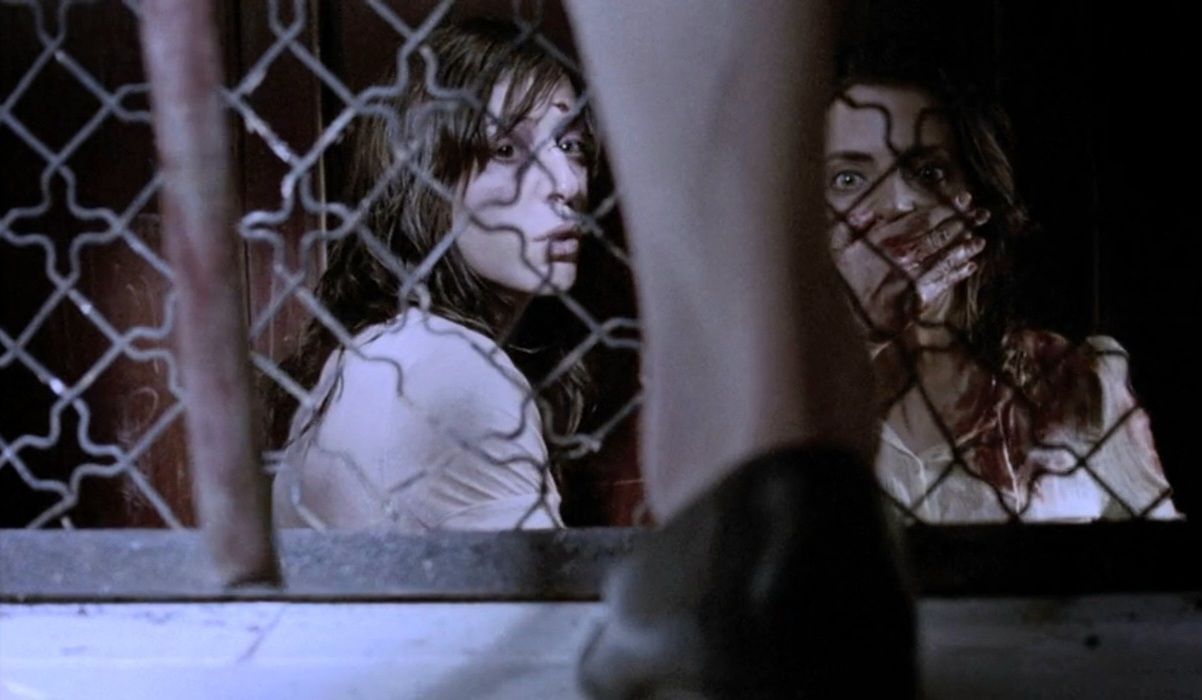
The year before Balagueró kicked off one of the best-known Spanish horror franchises with REC, he made another film, also largely taking place in a single apartment building. Rather than disease and zombies, the threat here is a barking mad landlady (González). Her newest prospective tenants are Clara (Gómez) and Mario (Collado). are looking for a larger residence, due to Clara’s pregnancy. From the advert, this place seems too good to be true, and guess what? It is, being rundown to the point of teetering on decrepit. They make their excuses and prepare to leave. Unfortunately, the landlady isn’t the sort who takes being turned down kindly, whacking Mario upside the head, with what might be a toaster.
Turns out, she went loopy when the building was condemned and her tenants evicted. She has been luring people in with fake listings to repopulate the place, chaining them in their flats to make sure they stay put. With Mario largely out of commission, it’s up to Clara to try and find a way out of the building. What follows thereafter is a thoroughly entertaining slab of stalk and slash, fuelled by poor decisions, courtesy of Clara and Mario, plus the energetic and increasingly unhinged actions of the landlady. It is all very much dumb fun, with the emphasis equally on “dumb” and “fun”. I would recommend those who expect horror movie characters also to be MENSA candidates, to stay away.
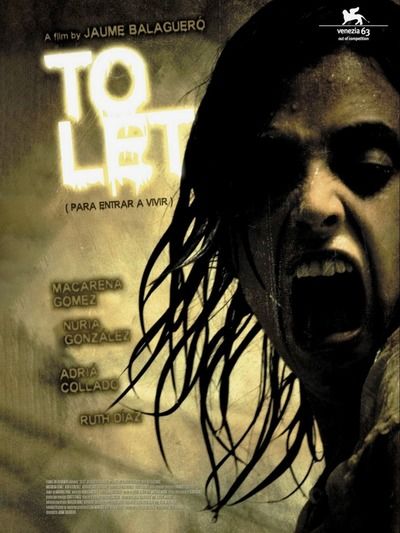 However, for the rest of us, this is a non-stop roller coaster. While it only runs sixty-nine minutes, this feels longer. Normally, that would be a bad thing. However, here it’s a result of there being an awful lot crammed in. From the moment of toaster-fu, things don’t stop for more than a breath or two, until the end credits roll. This also helps paper over elements which might otherwise have you going, “Hang on…” Such as the feeding and care of the residents. Or the mobile phone thing, which is only not an issue here, because Carla fortuitously fell asleep on the journey and so doesn’t know where they are. Spanish police also cannot apparently locate cellphones. Hey, it was 2006. Maybe that was a thing.
That all said, I found it remarkably easy to set any such concerns aside, and just enjoy the madness as it unspooled. Gómez makes for a fine última chica: in my head canon, her character goes on to become the zombie-hunting serial killer of SexyKiller. It would be understandable, given the physical and psychological wringer through which Carla is put over the course of barely an hour here. I previously noted how thirties classics like Freaks and Bride of Frankenstein run 75 minutes or less. This has a similar sense of efficiency and urgency. It also manages to touch one of my personal fears, in fairly spectacular fashion. Let’s just say, I won’t be unclogging the waste disposal unit, any time soon.
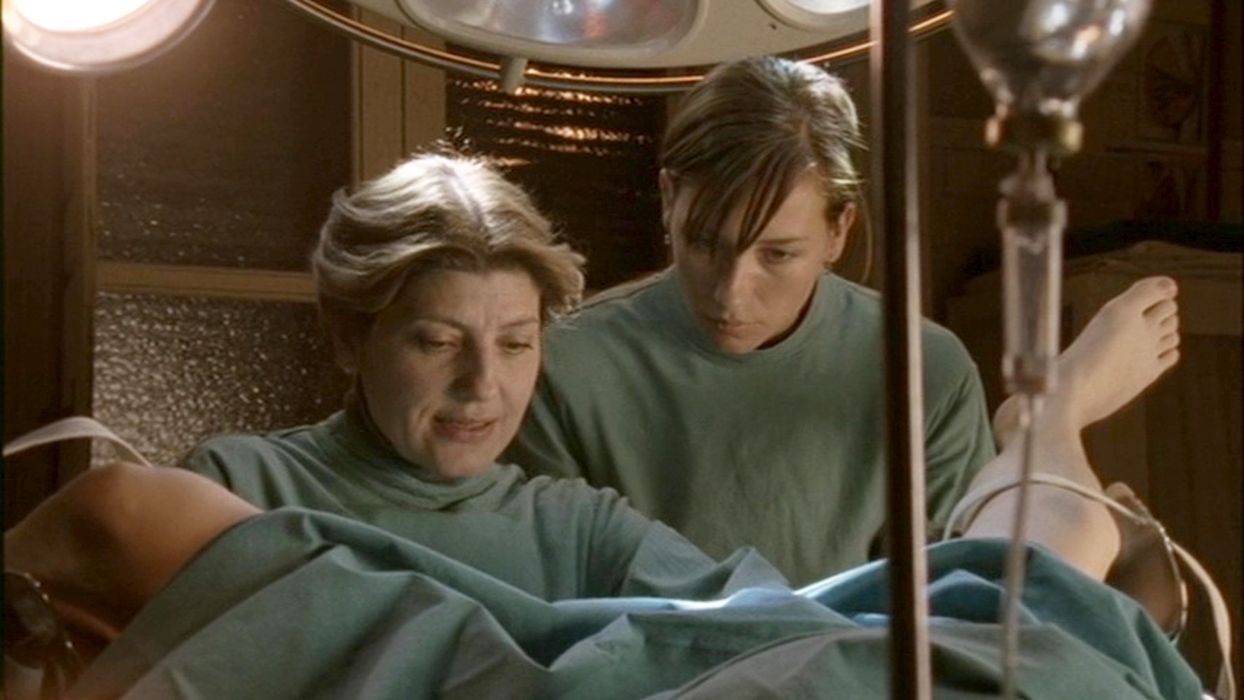
Blame (2006)
Rating: C-
Dir: Narciso Ibáñez Serrador
Star: Nieve de Medina, Montse Mostaza, Alejandra Lorenzo, Mariana Cordero
a.k.a. La culpa
Spoilers follow. While I always attempt to avoid them, in this case it’s unavoidable, if I’m to discuss this properly. It’s not a decision I took lightly. I typically start writing the review as soon as possible after watching a film, in order to capture my immediate reaction. I slept on this one, trying to figure out if I could work around the issue. But here we are, the next morning, and there’s no getting around it, save crippling my ability to review the movie. So, without further ado, let’s rip the Bandaid off quickly, and get the spoiler out of the way. It’s all in the main character’s head.
Well, not all, of course. Just the horror elements. Gloria (Mostaza) is genuinely an administrative assistant in a Spanish hospital at some point in the past. She is a single mother with a young daughter, Vicky (Lorenzo). When times get tough, they move in with Dr. Ana Torres (de Medina), a gynecologist who has her office in a large, sprawling home she rents. However, she also quietly offers abortions, at a time when (presumably – the film assumes the audience knows Spanish history on the topic) such things were illegal. Gloria ends up becoming an assistant to Dr. Torres, and when she becomes pregnant herself, reluctantly avails herself of the physician’s services. But the aborted foetus vanishes, and weird occurrences start happening, involving the house and Vicky.
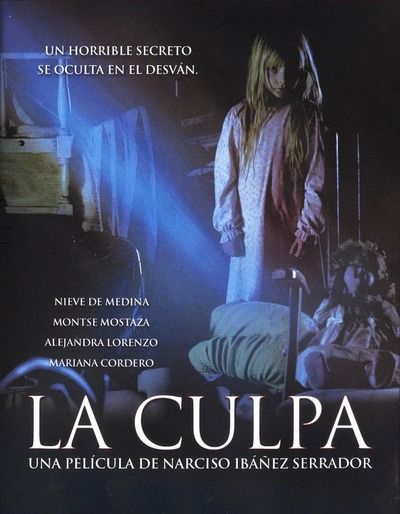 And these are all in Gloria’s head, because this is one of those “horror as metaphor” movies. Specifically, as the final shot makes obvious, events are an embodiment of her remorse at terminating the pregnancy. This is where the English language title might be a mistake. Guilt is another way to translate La culpa, and might be more accurate. Though it could also be a huge spoiler itself, so I understand the decision. But can anybody, hand on heart, tell me they would not have liked a film where an abortion goes around, taking revenge on those responsible? I know I certainly would have preferred that over what is, once the imaginary elements are removed, more a Hispanic kitchen-sink drama.
I was excited for this one, which sees the return of original Stories to Keep You Awake creator Serrador to the director’s chair. However, it’s jammed with too many red herrings, such as the door on the landing whose handle keeps moving. From the opening scene, of a body being dragged away, it tries to set up Dr. Torres as the killer of a vanished former housemate called Christine. This goes nowhere, but in hindsight, she might be a metaphor for the disappearance of Christian morality from the house. Did I mention Dr. Torres is a lesbian in addition to being an abortionist? Yet she’s not the villain. Indeed there really isn’t one here, and the whole thing is very gynocentric, to the point there’s barely a man present. But it definitely needs more genuine vengeful fetus.
Spectre (2006)
Rating: D+
Dir: Mateo Gil
Star: Jordi Dauder, Natalia Millán, Juan José Ballesta, Victoria Mora
a.k.a. Regreso a Moira
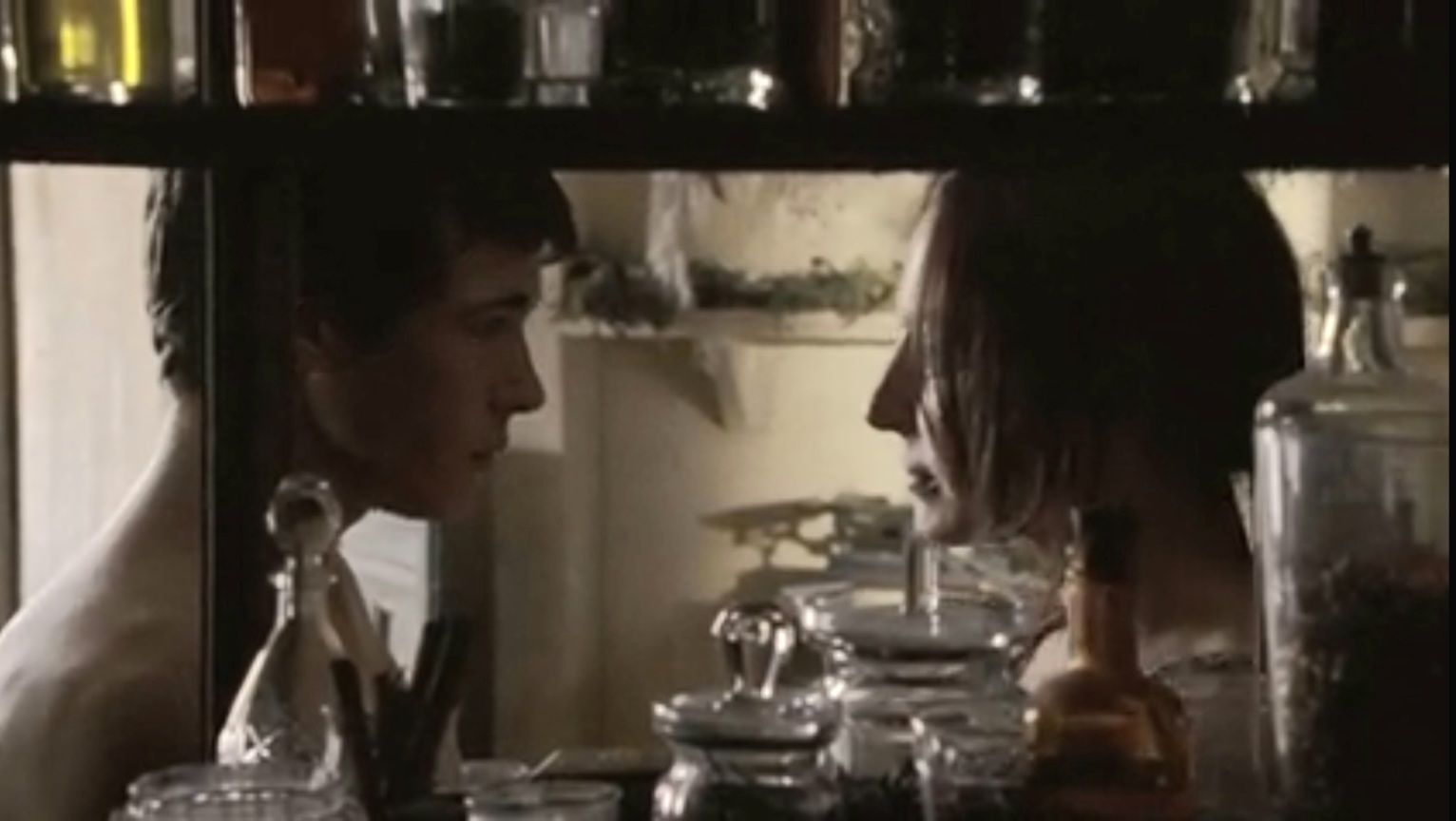
I’m glad this wasn’t the first entry I happened to see in the series. Because if it had been, this might well have been one and done. It’s simply not very interesting, despite being by the writer of the very impressive Open Your Eyes. Maybe he used up all his imagination there, since this would have struggled to sustain a 15-minute short. It bounces back and forth between the present and over forty years previously. In the current era, Tomás (Dauder) is going back to the rural village where he grew up, having been sent a tarot card, which triggers memories of his youthful experiences there.
In particular, his relationship with a mysterious woman, Moira (Millán), who has moved into town and become the subject of much gossip. Her non-attendance at church is considered suspicious, and she is blamed for the ongoing drought, animals falling sick, etc. The usual witchcraft stuff, in other words – up to and including contorting with Satan. The young Tomás (Ballesta) goes with his pals to her house on a dare, but sprains his ankle and consequently discovers that Moira is hardly the cackling crone of local scuttlebutt. This blossoms into a love affair, which isn’t exactly going to meet with the approval of Tomás’s parents. There’s a strong subtext of religious criticism here, with these villagers in the sixties behaving with all the tolerance of 17th-century residents of Salem.
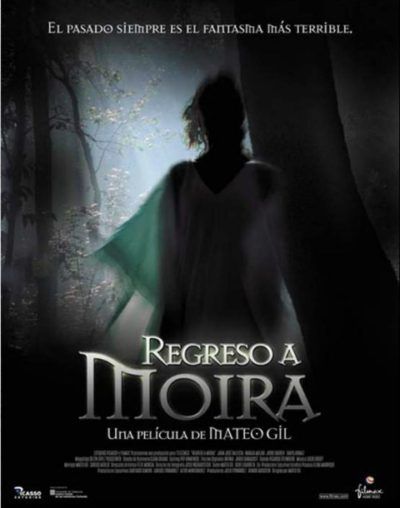 It’s considerably more of a romance for the majority of the running-time, and the age difference had me thinking, “Well, they kinda have a point,” with regard to the local mob. Maybe not quite to the torches level we eventually reach, but I was leaning towards #TeamVillagers. It certainly could have been disposed of at greatly reduced length, giving the modern era scenes more time to be developed. Instead, there are elements such as the recent suicide of Tomás’s wife, which don’t serve any significant purpose, beyond teeing up a cool, mildly spooky image in a bathtub. It seems he has continued to carry a torch for Moira over forty-plus years, though the question of whether she is a witch, a ghost, or what, are left unanswered.
Forgive me a cheap shot: rather than being a “Film to Keep You Awake”, this is more likely to send you to sleep. I’m not averse to subtle or understated horror. However, there needs to be something on which it can be hung, and there just isn’t enough here to keep me interested. Ballesta isn’t a good actor, compared to the older version of his character, and as a result, most of young Tomás’s scenes are a chore to watch. Meanwhile, Dauder is better, yet his iteration doesn’t get to do much except wander round town, and have mildly enigmatic conversations with old associates. All told, Gil seems more interested in making points about small-town bigotry than horror – or even keeping the viewer conscious.
A Real Friend (2006)
Rating: C+
Dir: Marcel Rodriguez and Enrique Urbizu
Star: Nerea Inchausti, Goya Toledo, Eduard Farelo, Josep Maria Pou
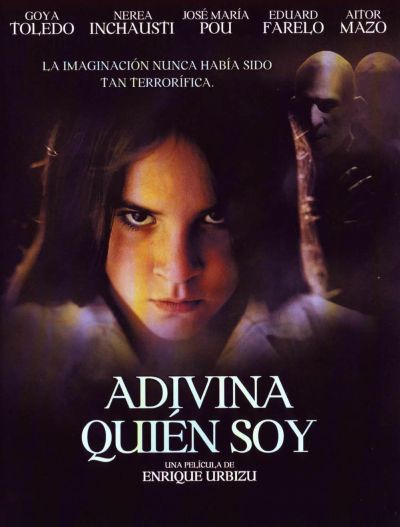
a.k.a. Adivina quién soy
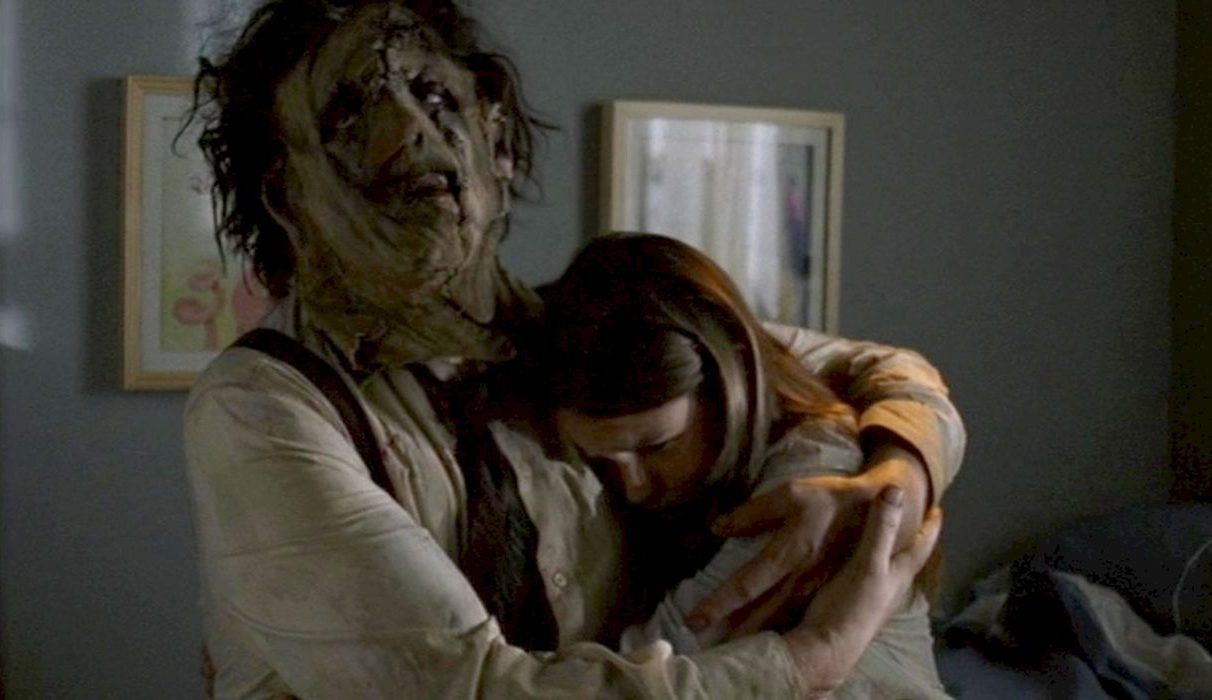
There’s a grand concept here. Estrella (Inchausti) is a lonely little girl, who has no real friends. I’m using “real” there in both senses of the word. For she does have imaginary friends. Nothing particularly abnormal about that. Except, Estrella’s friends are a product of her deep and abiding interest in all things horror. She reads horror novels, and when her single mother Angela (Toledo) is at her job as a nurse, Estrella sneaks in viewings of the films she’s not supposed to watch. Consequently, her imaginary friends are a vampire (Farelo), and someone who is as close to Leatherface as you can get, without receiving a stern letter from Tobe Hooper.
This alone seems like it would be plenty to fuel things. There are wonderful moments: after she has an argument with her mother, Estrella runs off to her room where Leatherface comforts her (above). They seem like a manifestation of her inner torment, stemming from issues like the absence of her father – a situation which Angela refuses to discuss in detail with her daughter. Key word: “seem”. Because then the vampire shows up at the apartment, and clearly has a real existence, both being visible to Angela, and knowing significantly more about the paternal situation than Estrella. Complicating – or possibly, confusing – matters further, is a mature man who might be… a monster hunter of some kind? Or perhaps just a character in one of Estrella’s movies.
 I found a lot to admire in the approach here. The city in which they live is almost eerily deserted, save for the characters directly in the movie. Almost the only background figure is a clown – which, given Estrella’s affinity for Stephen King, is likely an It reference, and another product of her imagination. However, I found the film struggles to differentiate between these constructs and reality. There are also problems with some threads in the story, which are either discarded with an almost facile ease, or never suitably resolved. After a thoroughly engaging first half, the problems thereafter became increasingly hard for me to ignore. I was left unsatisfied, and given the strong beginning, that felt a particular pity.
The Spanish title translates as “Guess who I am”, and that may be a little more accurate in its ambiguity. The “I” in that title could apply to a number of characters – in particular the vampire. Though perhaps also Estrella, who certainly has depths which she keeps hidden from her classmates, and even her mother. There is also a constant stream of news reports on the media, describing violent crimes. It feels like these are going to be important in some way, yet they apparently remain no more than window-dressing. It’s another way in which here are a lot of very good pieces here, yet the overall movie can’t tie them together, and consequently ends up as less than the sum of these parts. That’s both slightly frustrating, and a genuine shame.
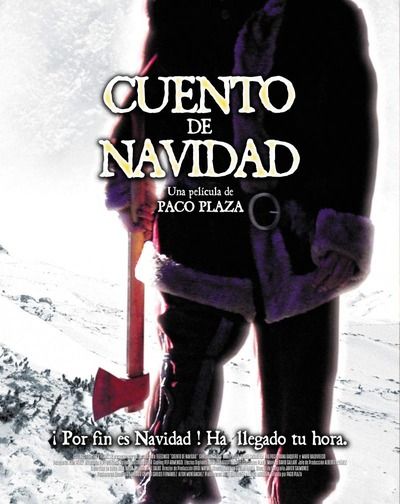
A Christmas Tale (2005)
Rating: B-
Dir: Paco Plaza
Star: Maru Valdivielso, Christian Casas, Roger Babià, Ivana Baquero
a.k.a. Cuento de Navidad
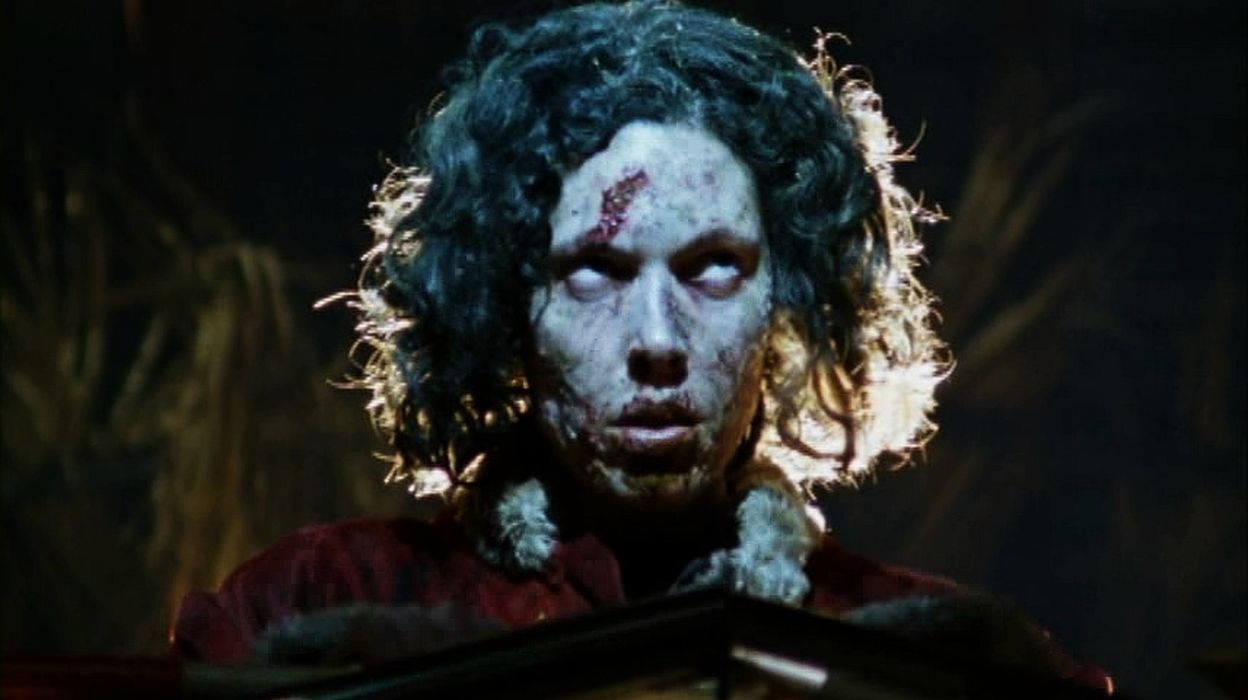
Despite the title, there isn’t anything particularly festive about this. Sure, the main antagonist is clad in a Santa suit. But it’s not especially significant, since it was simply the disguise Rebecca (Valdivielso) wore to help her escape after robbing a bank. Through circumstances which are never made clear, she ends falling into a pit in the woods, where she is found by a group of local twelve-year-olds. Discovering she’s a fugitive, they decide to starve her into giving up the loot. She’s not happy about this, to put it mildly, and when she gets out of her prison, all the kids are going to be placed firmly on the naughty list.
This is firmly set in 1985, with a lot of cultural touchstones to prove it. It might seem like a Stranger Things rip-off, if it hadn’t come out more than a decade earlier. For instance, one of the children is obsessed with The Karate Kid – and I must say, this has a delightful and unexpected payoff. It’s not just an empty reference. There’s also a fictional movie, Zombie Invasion (you might recognize Elsa Pataky in it), which also proves relevant, in how the kids deal with their pursuer, and how she deals with them. This unfolds in an amusement park closed for the winter, and earns a bonus point for unexpected Yes Sir, I Can Boogie – even if it is a little early for the period.
 One of the factors is the different personalities of the kids. Some have that brazen callousness of the young, while others are more doubtful about the plan to torture their prisoner. In particular, the only girl in the group, Moni (Baquero), is mostly sympathetic to Rebecca, trying to bring her food. [By coincidence, the previous night, we’d finished off Spartacus: House of Ashur in which Baquero also stars. Let’s just say, she’s all grown-up now…] There’s a resulting tension, though when push comes to shove, they stand by each other. There’s a pointed lack of grown-ups here. Outside of Rebecca, the only other real-life adult is the local police officer, and you never get to see his face. This is almost like a horror version of Peanuts.
It’s a gradual drift into horror. The early going is close to a kids’ adventure movie, but the tone steadily becomes darker, the longer it goes on. Fantastical elements creep in too, the young fans of Zombie Invasion deciding to re-enact a voodoo ritual from the movie, because… Yeah, that’s another area where the plot is a little deficient. And would it have hurt them to kill off… anybody? However, there’s easily enough good here to merit the benefit of the doubt, and it kept me consistently engaged throughout. This is a huge improvement over Plaza’s feature debut, Romasanta: The Werewolf Hunt, and it makes sense why he would go on to become one of Spain’s most successful genre directors.