
Rating: B
Dir: Mel Brooks.
Star: Zero Mostel, Gene Wilder, Kenneth Mars, Dick Shawn.
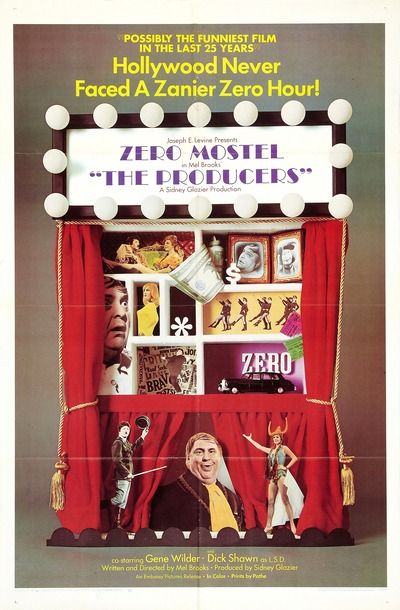
Given the concept, this unsurprisingly took a while to get made. Its origins date back to 1961, with Carry On star Kenneth Williams “under consideration for the leading role” according to the New York Times. A slew of studios and independent producers turned it down over the following years, before funding could be secured. At one point, Peter Sellers was going to play the role of neurotic accountant turned Broadway producer Leo Bloom, and Dustin Hoffman that of Nazi playwright Franz Liebkind. Would certainly have been different from Wilder and Mars. Though in general, it’s the parade of crazy characters and escalating lunacy which makes this a comedy classic. Remarkable, considering Brooks had never directed anything before.
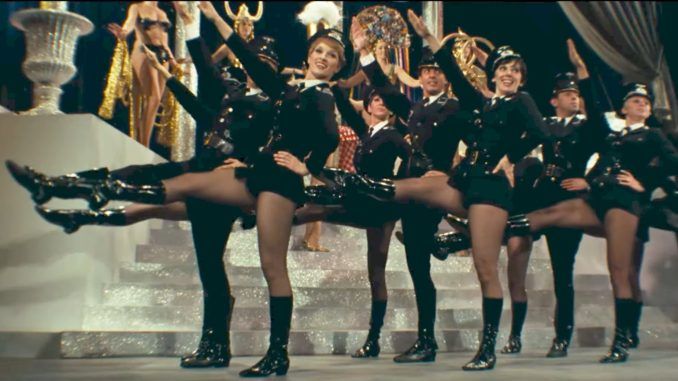
Former top-tier producer Max Bialystock (Mostel) is now reduced to seducing old ladies for investments. An by remark by Bloom (Wilder) gives him an idea. Oversell percentage points of profit, but if the play flops, nobody needs to get paid. To ensure that happens, they sign Liebkind (Mars) and his play, Springtime for Hitler: A Gay Romp with Adolf and Eva at Berchtesgaden. They then hire the stage’s worst director (a transvestite character inspired by Ed Wood), and get a hippie (Shawn) to play Hitler. Despite spectacularly bad taste Berkeley-esque musical numbers (“We’re marching to a faster pace. Look out, here comes the master race!”), the production is perceived as satire, and gets rave reviews. More extreme measures are required. Like blowing up the theatre.
 This may have been Brooks’s first film, but the basic principles of his comedy stylings are already clearly apparent. Parody, a mix of high-brow and low-brow humour, and a willingness to go after sacred cows with a chainsaw. This goes from quoting Franz Kafka, to an extended sequence of a faux “Swedish” secretary (played by the New Jersey born Lee Meredith) shaking her boobs. The willingness to make Nazi jokes is certainly laudable, though I’m not sure ridicule has ever brought down a dictator. Especially one already dead for over twenty years. This also came out more than two years after Hogan’s Heroes made the Third Reich a figure of fun on network television, so is not as groundbreaking as some claim.
There remains a lot to enjoy here, and I laughed out loud a lot. No, really: a lot. From little things, like Max’s cupboard filled with framed photos of his geriatric lady friends, or the weirdness of director Roger De Bris. That gay stereotype would probably be the most offensive thing to modern sensitivities. But it’s the unrepentant excess of Springtime For Hitler which cranks everything up to eleven. Much like the Bialystock and Bloom’s play, the movie was not well-received at first. It took a public appeal by Sellers to get it released at all, and barely broke even on its first run. Initial reviews were bemused, renowned critic Pauline Kael calling it “amateurishly crude.” Time has been kinder: that phrase now seems a badge of honour.