
Rating: B-
Dir: Kaweh Modiri
Star: Sohrab Bayat, Eddie Paton, Lily Szramko, ‘Red’ James MacMillan
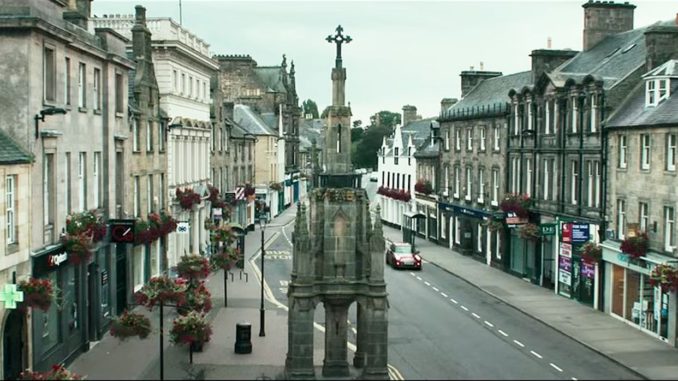
I was born and grew up in Forres, the town in the North of Scotland where this takes place. It’s a small place – population maybe ten thousand or so, and Forres was name-checked by Shakespeare in the opening scene of Macbeth. We also killed some witches. Rolled them down the hill in spiked barrels, then burned them where they stopped. Nothing more exciting than that has happened in the four hundred years since. It’s weird seeing so many places with which you’re deeply familiar on film, especially seen through the lens of a Dutch film-maker. This renders things faintly exotic and unrecognizable. Do Forresians really do little else except drink and feel sorry for themselves?
Into the town comes Bodkin (Bayat), a foreigner fleeing from his past. But then, it seems so is everyone he meets. Fence-maker Eddie (Paton) has seen two sons commit suicide. “Red” James (MacMillan) has a criminal record for violence. And Lily (Szramko) simply wants out, having been brought to Forres by her parents. None are happy. But they all welcome Bodkin, in their own way, as he tries to come to terms with his own history. There’s a lot of drinking too, whether it’s in one of the (many) local pubs, the Eagle, or at an impromptu barbecue organized by Eddie. Does it help? Probably not. While it numbs the pain for a while, whatever issues you have are still there when you sober up.
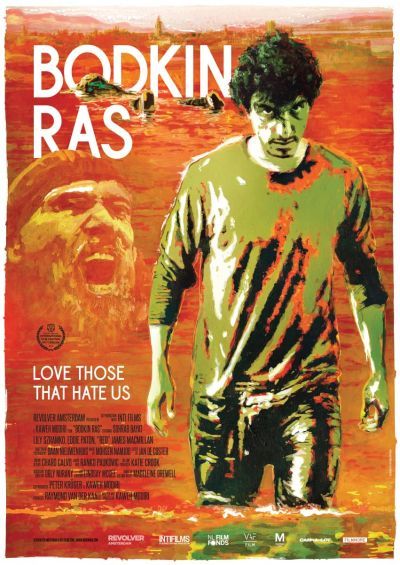 Bayat is the only person here who is a professional actor. Everyone else is a local resident, recruited to the production, though I didn’t see anyone I recognize [unsurprising, since I last lived there in 1987] These performances are, unsurprisingly, often brutally naturalistic to an uncomfortable degree. The most fascinating figure is probably Red, who both writes poetry, and describes an incident where he attacked a man and the victim’s eye fell out. Billy Connolly’s psychopathic cousin might be the best way to describe him. It’s the characters (one inexplicably nicknamed Hitler!) who drive this, the plot being very much secondary, if that. If you don’t want to spend time with them – and non-locals may want to enable subtitles – this is going to be a slog.
I mean, it did somewhat remind me of why I moved out, over forty years ago. As depicted here, the town feels like it might have been frozen in time at the moment of my departure. A few shops have changed, and that’s about the extent of things. Like many small towns, Forres feels like its dying from the centre out, becoming just a dormitory location. Yet as I age, so does the appeal increase of life in a small town, as opposed to a big city. Sure, everyone knows everyone else’s business. Going by this, they just don’t care very much. The idea of moving back, and spending my days drinking heavily in the Eagle, now has a certain fascination.