
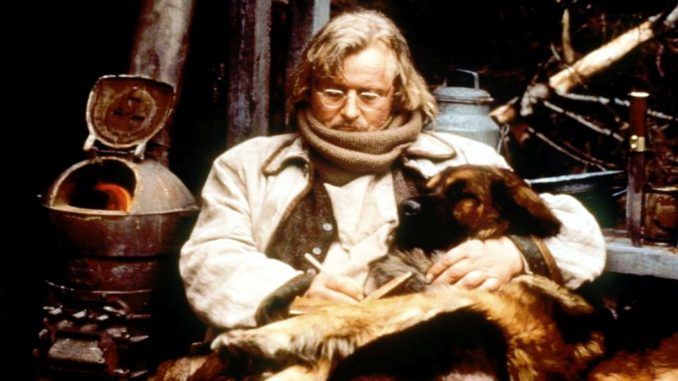
Rating: C
Dir: Peter Svatek.
Star: Richard Dreyfuss, Rutger Hauer, Bronwen Booth, Charles Edwin Powell.
I am a cat person. This alone probably makes me not the target audience for this TV movie, which is unequivocally a dog film. I am also unfamiliar with the classic book by Jack London, on which this was based, so am not able to comment on the accuracy thereof. More informed viewers than I have praised this adaptation. I only bothered with it because I like Hauer, will watch him in just about anything, and I’d not heard of this before. After watching it, I can kinda understand why, because if you are not a dog lover with a fondness for snowy landscapes, there is not a great deal here of interest. Even Hauer.
I am glad that it opened with a detailed disclaimer about how the animals on set were treated. Because otherwise, I would have been very concerned. All the animal actors here, along with their handlers, do excellent work in depicting the brutal, dog-eat-dog (almost, but not quite literally) nature of life during the Klondike Gold Rush of the late 19th century. Credit Vasko, Gessa and Gustave, the trio of Leonberger dogs, who played the hero here, Buck. He is removed from a sedate, middle-class life in the household of a judge, and sold off to Alaska, where under a variety of owners – some good, some bad – he must learn to handle the new, harsh world.
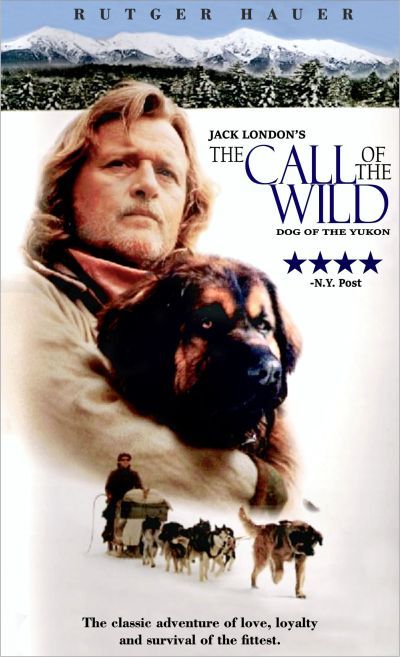 Buck finds his final master in prospector John Thornton (Hauer), representing someone who treats the canine with respect, not just a furry machine for pulling a sled. But the titular yearning is never totally absent, with the local wolves representing a potential option to escape the yoke of human domination forever. Rather than Hauer, centre stage probably goes to Dreyfus, who provides frequent narration to overcome the pesky problem of Buck being unable to speak. This has some thought-provoking moments, such as when Buck discovers he must steal food to survive. “It was all well enough in the Southland, under the law of love and fellowship, to respect private property and personal feelings. But in the Northlands, under the law of club and fang, whoso took such things into account was a fool.”
This comes straight from the book, and was a bit of a surprise, given I always considered London of a Socialist bent. It sounds far more Nietzschean. If Nietzsche was a dog, anyway. There isn’t much in the way of real drama here: it’s mostly Buck trying to survive, while some of his owners prove soundly unsuited to the conditions. Hauer certainly feels wasted, except for a scene where he and Buck win a bet about their pulling capacity. However, his quiet and calm on-screen presence is an appropriate fit for the quiet and calm Canadian wilderness. I must confess, I was wanting him and Buck to retire together, to a country cabin. London and the movie, it appears, had other ideas…