
Rating: C
Dir: Sidney Lumet
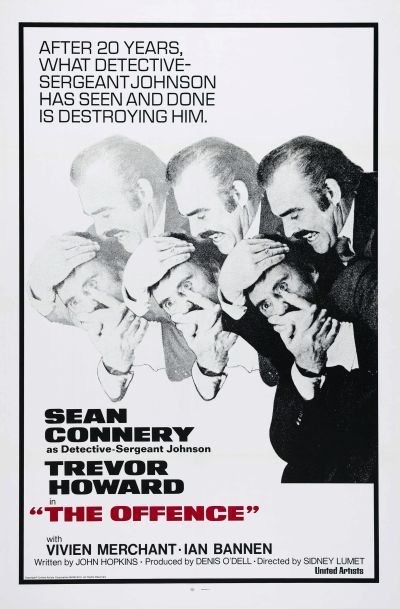
Star: Sean Connery, Ian Bannen, Trevor Howard, Vivien Merchant
I suspect this might have packed more of a punch – pun, as we’ll see, not intended – at the time. These days, the Troubled Cop™, unable to let go of a case, and burdened by psychological baggage, is perhaps the most common trope in the detective genre. I blame Scandinavia. In the early seventies, however, policemen still tended towards the heroic: Dixon of Dock Green was the archetype of British television, rather than Z-Cars, and The Sweeney was a couple of years off. Cynicism about law enforcement therefore remained in its infancy, though I note Lumet’s other film released in 1973 was Serpico, which took that sceptical approach even further, applying it at an organizational rather than personal level.
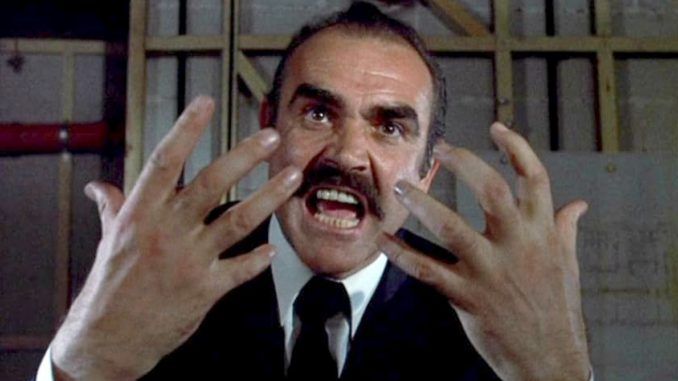
It begins with Detective Sergeant Johnson (Connery) beating the shit out of Kenneth Baxter (Bannen), a suspect in a recent series of child abductions and sexual assaults. We then go back and forth in time, between the events that led up to this interrogation, and the subsequent ripples. The latter involves Johnson struggling to communicate with his wife Maureen (Merchant), because he has been ground down by all the terrible things he has experienced on the job over the years. Then, there’s a meeting the next morning, with Detective Superintendent Cartwright (Howard), as Johnson tries to explain events from his side. Finally, there’s the interview with Baxter, who does a very good job of pushing the cop’s buttons.
 In the latter stage, it becomes clear that there might not be as much difference between the two men as Johnson would like to think. Though the question of Baxter’s guilt is left deliberately uncertain. The origins in a stage play, John Hopkins’s This Story of Yours, are rather obvious. Save some early scenes around an anonymous council estate, the majority of this takes place in the police station or Johnson’s home, and it largely two people yelling past each other. I’ve never particularly been convinced by Connery’s skills as an actor, and this doesn’t move the needle much. Here, he’s a tightly-wound spring, ready to pop, and it feels like Sean is delivering every line of his performance through clenched teeth. I found it wearing, rather than compelling.
Bannen is a little more nuanced, but just about everyone here is Acting with a capital A, perhaps another artifact of its theatrical origins, and consequently are aiming their dialogue at the back of the dress circle. This was made by Connery’s production company, part of a two-picture deal worked out when he agreed to do Diamonds are Forever. That no second picture ever materialized is probably significant, the first not being a success at the time. This was despite re-uniting Connery and Lumet, the pair having worked together previously on The Hill and The Anderson Tapes. Here, though, it feels that Lumet didn’t grasp the nuances of the English location, and it comes over as more hard-boiled and noirish than suburban London.