
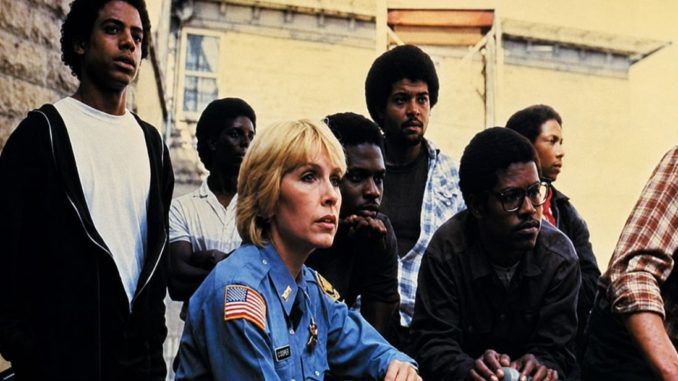
Rating: C+
Dir: William A. Graham
Star: Stella Stevens, Amy Steel, Debbie Allen, Yaphet Kotto
This is, I guess, a “women in prison” film. Just not in the way you’d expect. Because the women here are guards, not prisoners. I never particularly thought that was a thing, expecting all the guards in a men’s prison to be male – especially in somewhere with such a brutal reputation as San Quentin. This suggests otherwise, and appears to reflect reality: they’re rare but not unknown. The TV movie was originally based on an idea by cult icon Larry Cohen, though he says the finished item bore little resemblance to his original concept. It follows new officer Liz Larson (Steel), as she joins the team, and has to deal with some push back – not just from the prisoners, but male staff as well.
However, the place is a powder-keg already, with the East block home to the Black Liberation Front and the Soldados Unidos, two race-based gangs with a sharp enmity for each other, and the guards. Lieutenant Janet Alexander (Stevens – the same year she also played a prison guard in Chained Heat) has to try and stop things from going off, and unexpectedly, is depicted as smart, experienced and thoroughly competent. Indeed, it may be the film’s strongest suit. Given the genre, you’d expect the characters to be a series of stereotypes, yet it does a very good job of confounding those expectations. This helps make up for the fact that, given the medium, you shouldn’t expect the usual exploitative elements of the genre. Sex and violence are both limited.
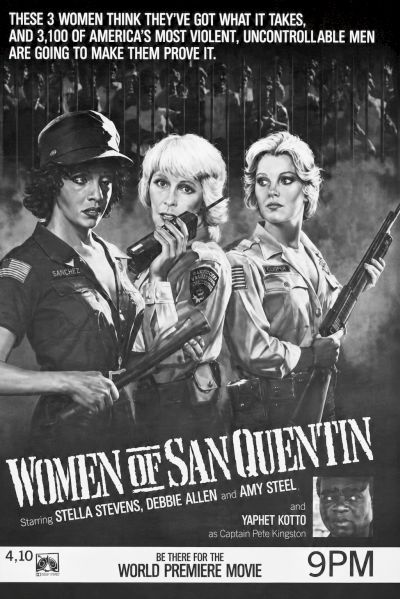 In general, it’s fine when concentrating on the day-to-day workings and internal politics of the facility. I confess to finding them, quite fascinating. The prison (Old Max Territorial stood in for San Quentin) operates as a miniature version of society in general, with power groups evolving in tension with each other. As Alexander puts it after a black prisoner is assassinated during a transfer, “They want to remind us of the hairline difference between who runs this prison – we or they.” Less successful are some story elements which seem to have strayed in from a soap opera. The most obvious is Alexander being in a romantic entanglement with her boss, who wants her to sacrifice her career for their relationship.
You could argue the finale of the film is also rather contrived, and a bit implausible. It sees things kick off during a concert in the yard, but Alexander goes into the belly of the beast herself and talks them down. It’s not exactly Rodney King saying, “Can we all get along?” but “We all got to live here together” isn’t a million miles away. Credit to Stevens for doing a good enough job of selling her fairly inane monologue, that thoughts of Alexander being torn limb-from-limb by a pack of crazed convicts, only somewhat derailed the tension. Despite the flaws, this is certainly better than most television movies of the eighties, and doesn’t get bogged down in annoying attempts at social commentary.