
Rating: C+
Dir: Anthony Harrison
Star: Katherine Alpen, Rémi-Gaël Panon, Amanda Burke, June B. Wilde
To answer the obvious question first. Exuvia is what gets left behind when an insect, spider or crustacean sheds its skin, typically when changing forms, such as a dragonfly nymph turning into the fully-fledged creature. Though the film explains this itself, I feel sure you were probably wondering. Bonus fact: it comes from the Latin for “things stripped from a body.” You’re welcome. The basic idea of the film is, that in order to move forward, you need to leave the old behind – and this applies just as much to human beings as insects. You’ll certainly get the message here, since the film goes at the same topic, from a number of different angles.
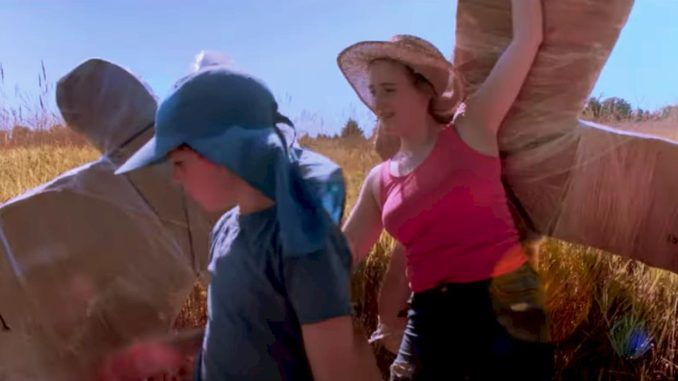
The main one stems from the relationship between ten-year-old Hunter Clarke (Panon) and his new Ukrainian nanny, Melina Shadrova (Alpen). It’s clear from the start that Clarke is a bit precocious, a word explicitly addressed by the film in its opening few minutes. But despite – or perhaps because of – his intelligence, he is not particularly well-adjusted. Hunter seems almost friendless: the only kids his age we see him interacting with are mean, calling him “EP”, short for “excess pounds”, because he used to be overweight. The fat may have gone, but the nickname remains as a reminder. Melina, too, has psychological history, in the shape of her relationship with her mother (Wilde), and Hunter’s own mom, Tamara (Burke), also needs to let go of elements in the past.
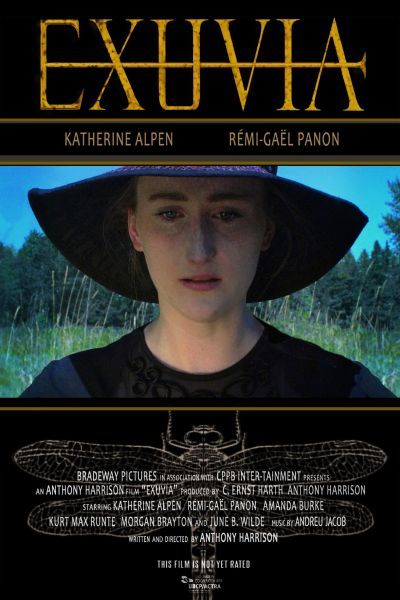 So, this certainly can’t be accused of leaving its point understated: it’s the same concept, applied to all the major characters. At points, it is definitely guilty of being too obvious, such as when Melina is carrying literal baggage around, and telling Hunter it’s her mother. The dragonfly metaphor (top) is also pushed a little too hard, to the point I wanted to yell, “Alright, we get it!” at the screen. Fortunately, if the script is too on the nose, the performances are generally winning ones, while the relationship between Melina and Hunter feels natural and organic. A precocious – there’s that P word again – child like Hunter could easily become immensely irritating, but Panon’s performance keeps it solidly this side of annoyance.
Indeed, I genuinely laughed at his response, when Melina teases him about being in love with her: “I’m a kid. I’m in love with my computer and my fish-tank.” It’s mostly low-intensity and gentle, with not much conflict here, except for the internal ones being fought by the characters. The main exception is when Melina’s mom shows up, for a scene which feels like it might have strayed in from a hagsploitation movie, though it’s undeniably effective. That, and Hunter’s low-key confrontations with his bullies, are about it, though there was one scene where I suddenly thought Melina had killed Hunter and stashed him in her suitcase. I clearly need to watch fewer horror films. But if you’re in the mood for a thoughtful drama instead, this will do nicely.