
What led up to The Girl in the Woods?
I’d been writing for about two years and ended up with six other scripts. What would happen is after I’d finish one, I’d send it out to competitions and labs and grants—anything I could think of that could help get it off the ground. And then in the meantime, I’d start writing the next one. But nothing ever came from any of it. I’d get close in a competition and get excited, but then it wouldn’t work out. It felt like I was putting in a lot of work. The gears were turning but I wasn’t going anywhere.
“There’s no point in another script collecting dust on a bookshelf.”
Tell us about the inspiration – both cinematic and scientific – behind the film.
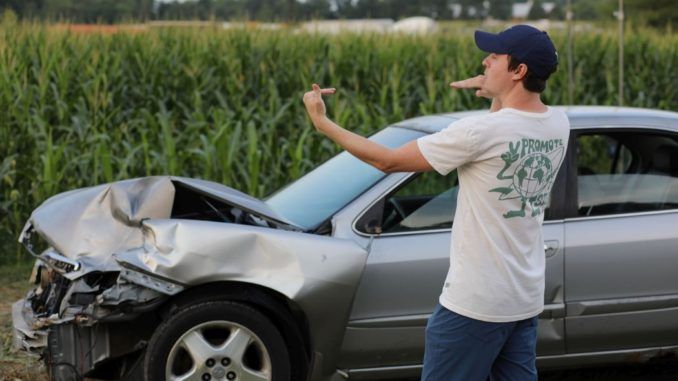
I guess the inspiration for the film starts with the science, because, without really giving it away, the big reveal at the end is something I’ve thought about since I was a teenager. I remember running late to work when I was maybe 17. I pulled onto a road and didn’t see a car coming and they had to swerve to avoid a wreck. I remember thinking “in another universe I died just then.” There’s this theory called Quantum Immortality which takes the stuff of quantum mechanics and applies it way up here to our experience as humans. I sort of always believed in that before I had a name for it or knew other people were thinking it too. I think it was at the forefront of my mind when I was writing because of all the things that were happening around 2020. I remember thinking “God, I hope this isn’t the only timeline.”
The other big inspiration for the movie was having my daughter. You’ve got this plot that’s part mystery, part thriller, it’s got a science backdrop to it, and all these other things, but at its core, it’s really just about a guy learning to be a dad. The parts of the movie I relate to the most are having to make up a bedtime story on the spot, or putting a kid back to bed after they’ve had a nightmare. All that stuff was just writing what I was experiencing being a new dad. That’s my favorite stuff in the movie.
It apparently took five years from first draft to the finished product. Describe that journey.
The five years is a lot of just slow and steady chipping away at the things you need to do to get one of these things across the finish line. I guess it sounds long, and hopefully the next one comes out faster, but it was just the reality of having to do so much of it myself. Not the shoot itself – that was all hands on deck and everybody coming together to make it happen. That part was great. Everybody brought so much to set everyday, whether it was ideas for how to fix something that wasn’t quite working or just the energy to keep moving forward. But then their job is over. I had Melissa, my wife and producer, for pre-production and the actual shoot, but after that, it was just sitting in front of a mountain of footage and piecing it all together bit by bit.
It’s funny because the first part of getting a movie made is a lot of time spent trying to get the money to do it. That was maybe two years for us. And during that time, you’re scouting locations and making shot lists and shooting test footage, figuring out the effects. And then you get the money and everything suddenly goes very fast now. The shoot is over in three weeks. And then it’s a year of editing and four months working with the composer, and foley – foley is the really tedious stuff that drives you mad. The part of the process where you’re actually shooting the movie is such a small fraction of the time spent making a movie, and it’s the most important part.
You wore a few hats on the production. Which job did you enjoy most, and which was the biggest chore?
“The hardest is the cinematography”
The part that’s hardest – I wouldn’t say it’s a chore, but the hardest is the cinematography. I know every shot in the movie before we start. And no matter how many times I read a scene, it always looks the same in my head, but once you actually have to figure out how to light that scene – where can we put the equipment? Where does this C-stand go? – all that stuff I think is more difficult than a lot of people realize. Because suddenly you’re having to deal with shadows and reflections of lights in the windows, and where can we fit the dolly in this small space so we can push in beyond this couch and close in on a flickering light bulb?…and keep it all in focus, that’s tough. It wouldn’t be all that bad if I wasn’t also trying to direct the movie. But doing both… maybe it is a chore. I’ll just say it. It’s a chore.
You said, “We figured we could scrape by on 25k. Kickstarter ended just under 10k. We decided, screw it, we’ll make it anyway.” What challenges did that pose? And what would you have done differently, if you had raised more money?
It’s not a sexy answer like really crashing the cars or having pyrotechnics or anything. The real answer is, if we had more money, I would have had a few more crew members on set to lighten the load and a few more days of shooting. I’ve shot two movies now and both of them ended up being eighteen days and so you’re moving so quick, there’s not much time to settle in and find your footing. The end of a shoot is so different from the first few days. By the end, you’re a well-oiled machine. I’d love to get a few extra days on the end.
Which aspects of the end result do you want to highlight in particular?
“It’s a sincere movie and I don’t think that’s the easiest thing to pull off.”
What’s next?
I just finished writing a comedy about competitive chess last September. I would love for that to be the next thing we make.
And, finally, the $64,000 question. Why should people watch The Girl in the Woods?
The funny thing is, after you’ve finished making a movie, you think the work is over, but then you have to be a salesman. Sometimes I feel like a used-car salesman going “What’s it gonna take to get you to watch my movie?” My pitch, I guess, is I think people want original stories. We all had a lot of fun with the superhero movies and the sequels and the reboots, but you talk to most people and they all say pretty much the same thing – they want to see something new. And I think most of them don’t care if it didn’t have a lot of money, as long as it’s a good story. And I think we told a good story.
The Girl in the Woods (2025)
Rating: B
Dir: James S. Ryan
Star: Doug Wilder, Selah Rose, Benairen Kane, Maggie Wilder
I think this is low-budget and independent movie-making done right. There may be nobody you’ve heard of involved in its creation, but the important aspects are solid. The idea is an interesting one, and the script is well thought-out: these are things which do not cost money. On the technical side, things are in focus and the dialogue is clearly audible. [That may seem like a given, but trust me, it definitely is not] It doesn’t look or sound cheap. Costs are helped kept down, by a small cast and limited number of locations. Knowing your limitations and working within them is key, and Ryan – wearing a number of hats – is not seeking to reinvent cinema here.
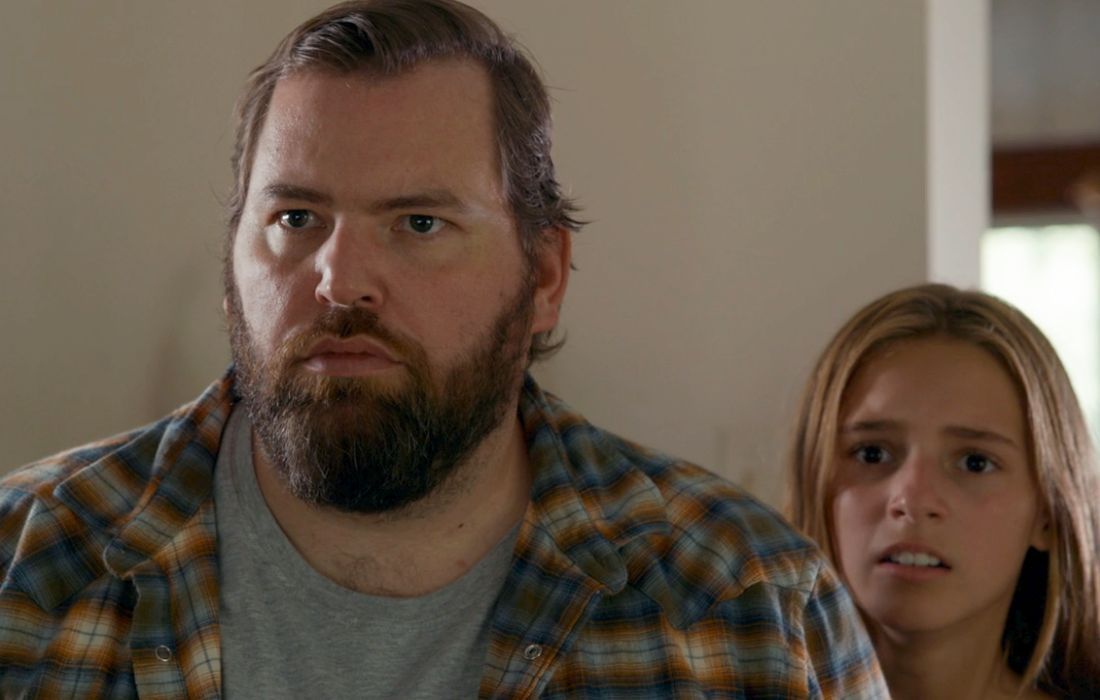
But it is a good story, well told. While there’s definite inspiration from Signs, and Stranger Things too, this has enough of its own flavours not to see a cheap knock-off. Malcolm Gardner (D. Wilder) has been going through the motions of life for a decade, since his wife Emily (M. Wilder – they are husband and wife in real life) was killed in a car accident, leaving him prone to narcolepsy. He keeps himself to himself on their farm, seeing hardly anyone except handyman Buffa (Kane). But then, a young girl (Rose), appears out of the woods around the house. Nobody knows who she is, or where she came from: even the local police are baffled. So she stays with Mal for now.
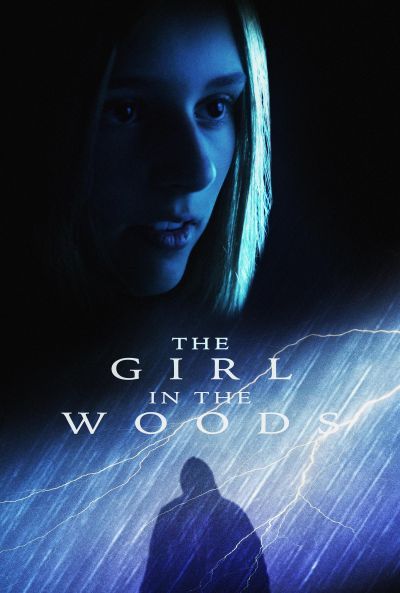 It’s not long though, before it becomes clear Luna – as they discover is her name – is not… normal. Objects move in her vicinity, and when she speaks at all, it’s typically to say ominous things like, “The Dark One is coming. You have to protect us.” And there is a figure, apparently watching the house from the trees. With the authorities less than convinced (they’re more concerned with the search for a killer, believed to be hiding out in the area), Mal and Buffa dig in themselves, researching everything fro folklore to cartoon shows to try and find out what’s going on. Best if I stop there. While the reveal and subsequent resolution is perhaps too tidy, it’s certainly good enough.
This is simply a film which I found very easy to like. It begins with Malcolm, and his struggle to find any meaning to existence after a horrendous loss. But all the characters here come over as genuine and real, all the way down to the local police officer or Buffa’s kid brother. I found myself invested in proceedings far more than expected, as the mystery deepened. While I did tag this in the horror genre, it’s of a very gentle kind, and is as much a mystery-drama. I really didn’t expect much here: I had no reason to do so. But it was perhaps the most pleasant surprise of the year to date.
[The film is available to stream now, through Tubi and other services]